Formentera has no airport. For anyone planning a day trip to Formentera from Ibiza, the crossing is the starting point — a 25 to 45-minute ferry across Es Freus strait, one of the busiest short routes in the Mediterranean.
The two islands sit close together, separated by the Es Freus strait, a channel of roughly 6 km that narrows to about 3.6 km at its tightest. It carries one of the busiest short ferry routes in the Mediterranean, full of visitors who are often surprised that they almost skipped the crossing.
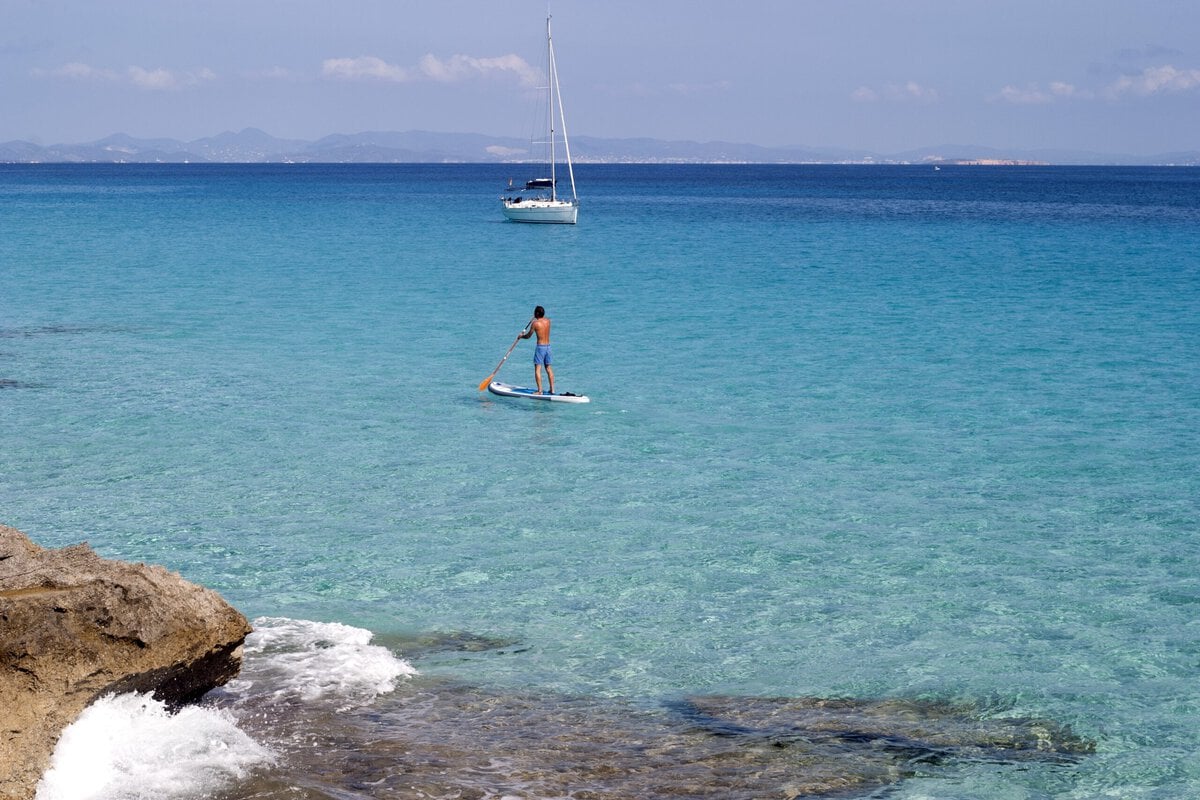
In one direction, you have Ibiza, with its nightlife, its crowds, and a long stretch of well-worn tourist infrastructure. In the other, you have the smallest inhabited island in the Balearics. It’s flat enough to cross by bike, clear enough to see the seabed from the ferry, and unhurried enough that the beaches are still empty out by evening.
The two islands share a strait but not much else.
How to Reach Ibiza First
Ibiza is served by flights from across Europe, and it’s also one of the best-connected ferry destinations on the Spanish coast. Travelers coming from Barcelona can take the overnight ferry, operated by Balearia, GNV, and Trasmed. Most crossings leave in the late evening and arrive in Ibiza the following morning after around 8.5 to 9 hours at sea, which effectively replaces a hotel night with a cabin on board. You can check current schedules and compare operators on the Ferryhopper Barcelona–Ibiza route page.
Once in Ibiza, the ferry to Formentera departs from the Maritime Station in Ibiza Town (Port d’Eivissa), about 1.5 km from the historic old town of Dalt Vila.
Travelers arriving at Ibiza airport can reach the port by bus (line 10, roughly 30 minutes, around €3.20) or by taxi (15 to 20 minutes, around €15 to €25 depending on traffic and season). The L10E Aeroport Express also runs direct from the airport to the port in about 20 minutes from late March to late October.
The Ferry Crossing from Ibiza to Formentera
The Ibiza–Formentera route is served by multiple operators running dozens of sailings a day in high season. The main operators are Balearia, Trasmapi, Formentera Lines (formerly Mediterránea Pitiusa), and Aquabus. Between them, they run up to around 47 crossings per day at the height of summer.
Crossing times range from 25 to 45 minutes, depending on the operator and the vessel. Balearia and Trasmapi fast ferries complete the crossing in 25 to 30 minutes. Formentera Lines takes around 30 to 40 minutes. Aquabus is the slower and more affordable option at around 45 minutes.
In high season (June to September), ferries run from early morning until late at night, with sailings roughly every 30 to 60 minutes and a quieter window in the early afternoon. In low season, frequency drops considerably and the last sailing back to Ibiza is earlier. Check current timetables before traveling outside peak months.
Foot passengers can usually board without booking far in advance for most of the season, though the last evening ferries back to Ibiza sell quickly in July and August. Vehicles (cars, scooters, bicycles) can also cross with most operators, but vehicle spaces are limited, and advance booking is strongly recommended during high season.
Check-in for foot passengers is at least 15 minutes before departure. For vehicles, allow 30 minutes. Approximate round-trip fares for adults run €30 to €50 depending on operator and season, with Balearia and Trasmapi at the higher end and Formentera Lines and Aquabus slightly lower.
The crossing itself is the subject of this guide, so it’s worth having the timetable open as you plan. The Ferryhopper Ibiza–Formentera route page lists all four operators, with current schedules and fares in one place.
Related read: How to Combine Mainland Spain + Islands on One Winter Trip: 10-Day Itinerary
Arriving at La Savina and Getting Around the Island
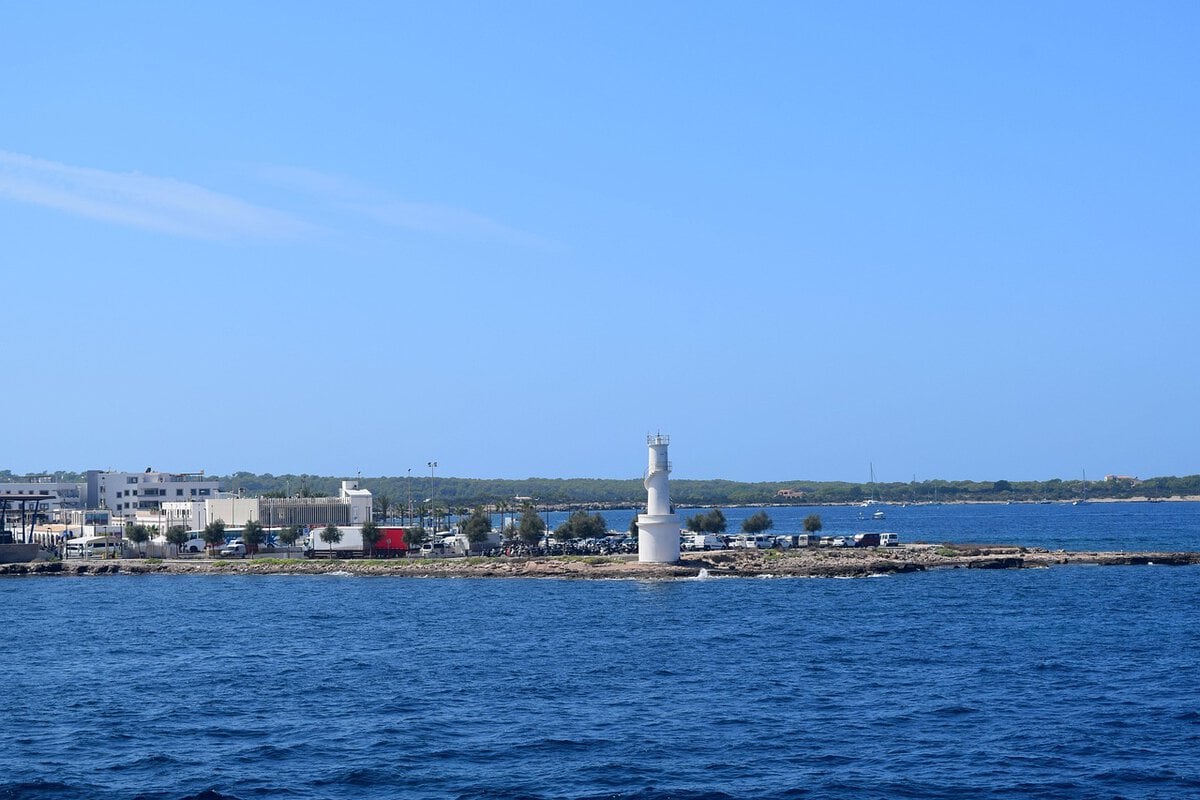
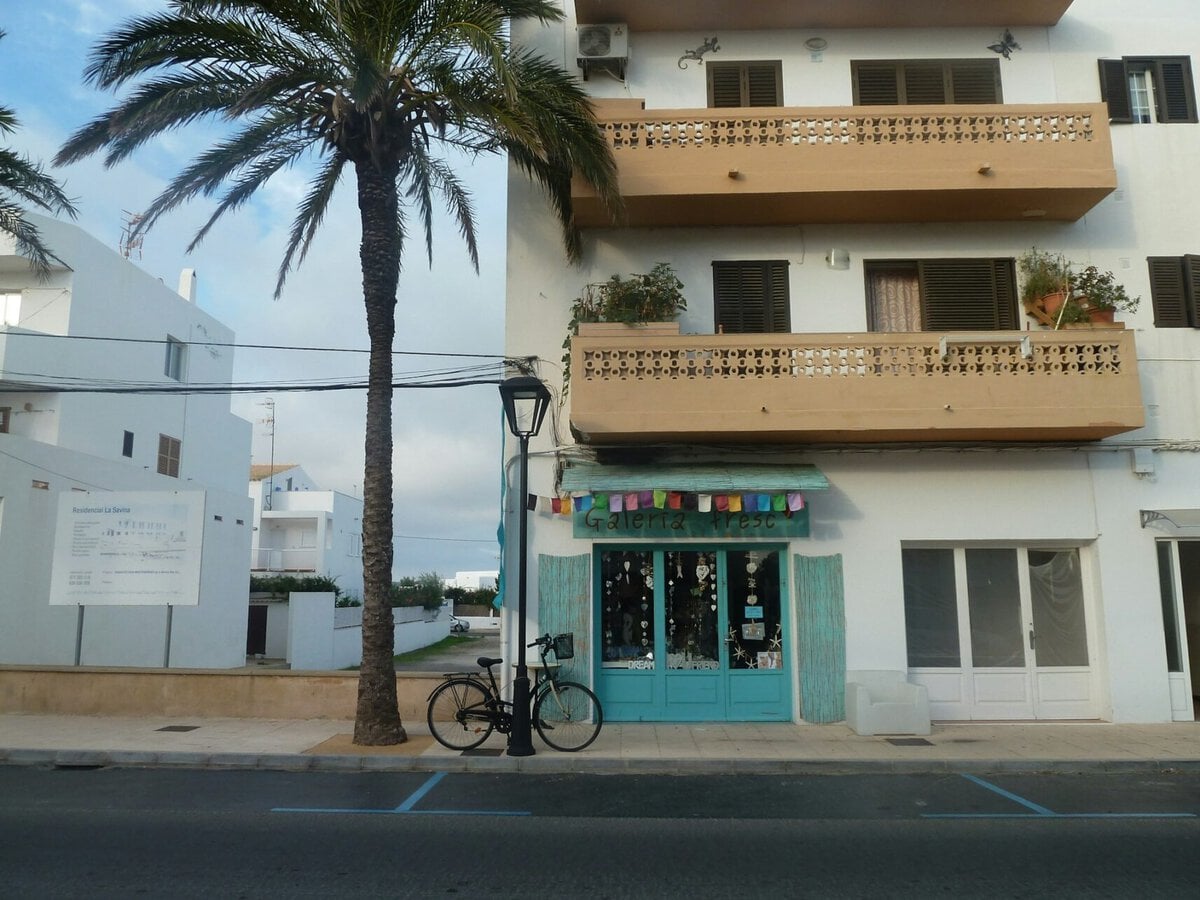
La Savina is Formentera’s only port and the point of entry for every visitor. It’s a small harbor with sailboats, a turquoise lagoon to the east, and salt flats visible along the approach road. The island’s main services and the first rental shops are all here.
Getting around
Scooter (125cc). The most popular option. Rentals in La Savina run around €25 to €35 per day. The island’s mostly flat terrain makes a 125cc plenty for the roads, and most rental shops are just steps from the ferry terminal. Booking ahead in July and August is wise, since stock sells quickly.
Bicycle and e-bike. Formentera has a network of green routes (rutas verdes), marked cycling paths that criss-cross the island away from the main roads. Standard bike rental is around €10 per day, with e-bikes higher. An e-bike has a real practical advantage at Ses Illetes, where pedestrians, cyclists, and zero-emission vehicles enter the Natural Park free of charge while cars and scooters pay.
Car. Around €80 to €90 per day for a small car in peak season, less in the shoulder months. More practical for families with young children or anyone traveling with luggage. That said, the access rules around the natural areas (see below) make a scooter or bike the more flexible choice for most visitors.
Bus. Formentera has a public bus service connecting La Savina with Es Pujols, Sant Francesc Xavier, La Mola, and Migjorn beach. Affordable and useful for reaching the far end of the island at La Mola, where the steep, narrow road isn’t ideal for cycling.
If you bring your own car or motorcycle over from Ibiza rather than renting on the island, note that from 1 June to 30 September visiting vehicles need an online permit through the island’s Formentera.eco system, with a daily fee and a seasonal cap on numbers. Rental vehicles picked up in La Savina are already covered.
What to Do in Formentera
Ses Illetes beach
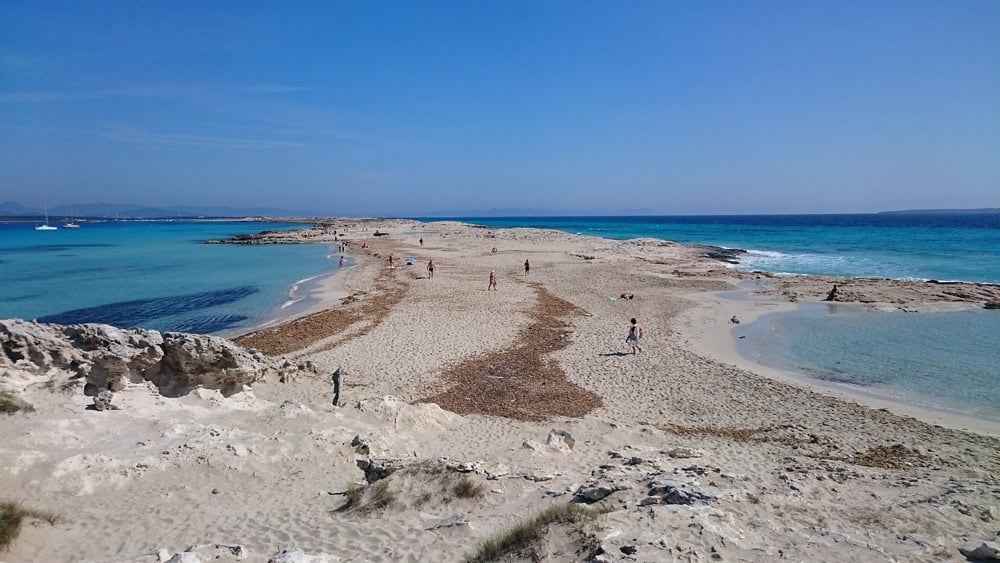
Ses Illetes is a narrow strip of white sand on the northern peninsula, inside the Ses Salines Natural Park, where shallow water over a sandy seabed turns the sea a blue that photographs rarely do justice to. It’s consistently ranked among the clearest-water beaches in Europe.
Access is regulated from May 10 to October 15, 2026. Vehicle access is controlled daily, with the longest hours (9:00 to 20:00) in peak season, which runs from July 16 to August 31. Parking capacity is 384 cars and 1,132 motorcycles. During the busiest hours, roughly 10:00 to 18:00, the lots fill up, and latecomers may have to wait or turn back. The practical strategy is simple. Arrive before 9:00, or come by bike. Pedestrians, cyclists, and zero-emission electric vehicles enter free of charge, and hybrids get a 50% discount. The same control covers the nearby Llevant beach.
Quad bikes have been banned from the Ses Salines Natural Park since 2016, and for the 2026 season the island has set a zero quota for quads altogether.
Cap de Barbaria
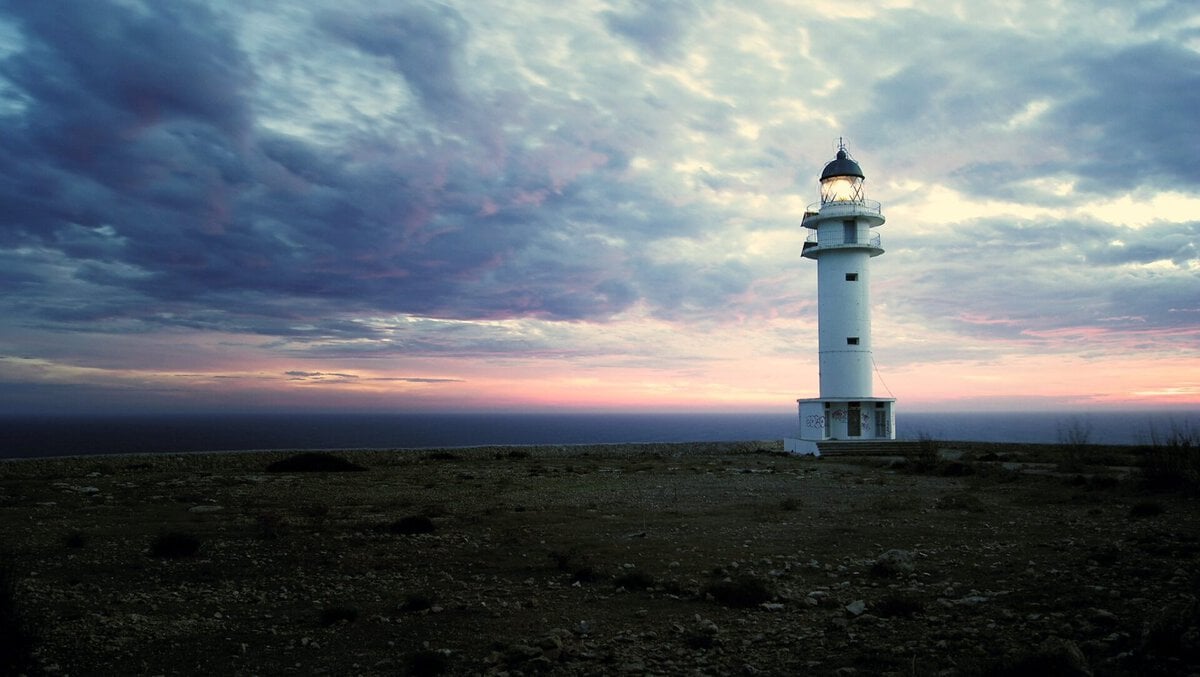
At the southernmost tip of the island, a long straight road crosses an almost bare promontory of scrubland and limestone before reaching the Cap de Barbaria lighthouse, inaugurated in 1971 and standing on a cliff about 65 meters above the sea. The views from the cliff edge take in Migjorn beach to the east, La Mola to the northeast, and on clear days, the profile of Ibiza.
From May 15 to October 15, 2026, vehicle access to the lighthouse is restricted. A barrier at kilometer 6.5 of the approach road stops cars and scooters, with parking for roughly 60 cars and 100 motorcycles. From there, visitors continue on foot, a walk of about 2 km that takes 25 to 30 minutes each way. The walk itself is easy and flat.
Next to the lighthouse area is the Torre des Garroveret, an 18th-century defensive tower built in 1763, and the Cova Foradada, a natural cave reached by a wooden ladder that opens onto a terrace above the sea.
La Mola lighthouse and plateau
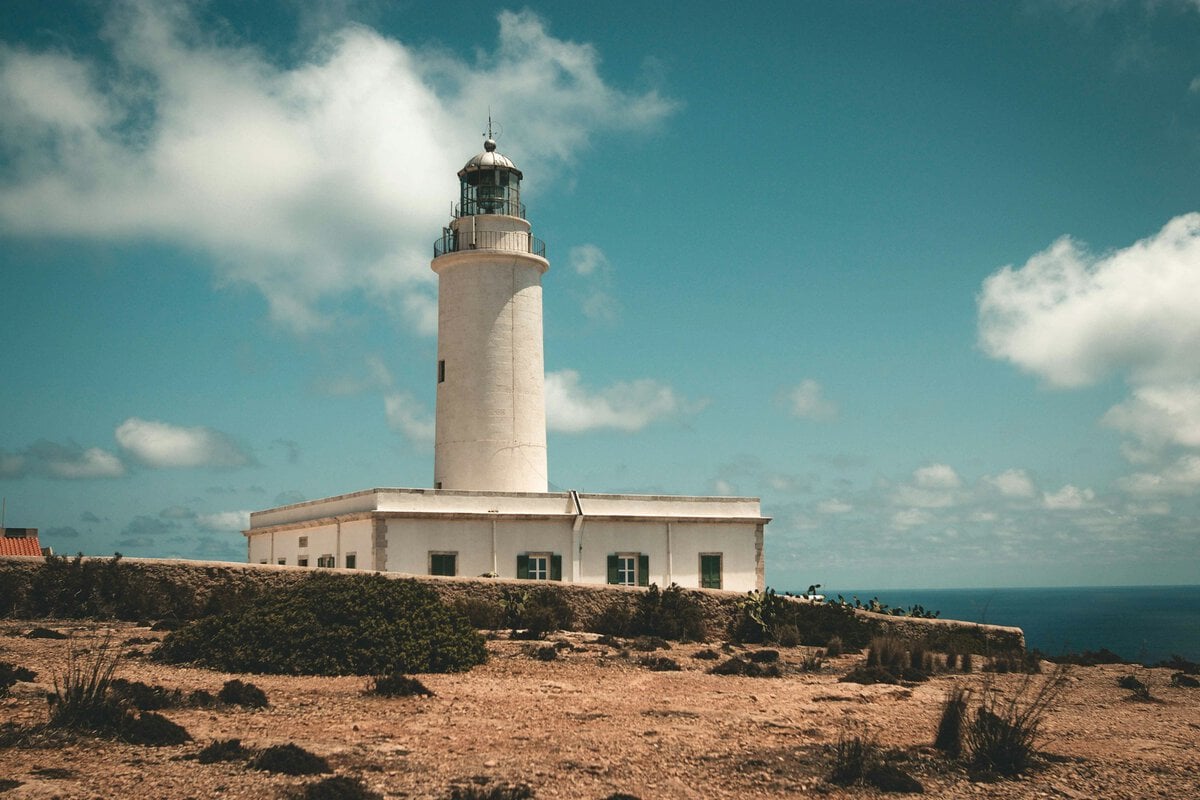
At the opposite, eastern end of the island, the La Mola plateau rises to the highest point on Formentera. The Far de la Mola lighthouse at the cliff edge has sweeping views over the Mediterranean. It’s tied in local memory to Jules Verne, whose 1877 novel Hector Servadac places a character observing the skies from the island’s highest point. Verne never actually visited, but a monument beside the lighthouse, erected in 1978, keeps the connection alive. The approach road from Sant Ferran climbs steadily, more of a challenge on a standard bicycle but straightforward by scooter or bus.
Near the lighthouse, the La Mola artisan market runs on Wednesdays and Sundays, from 4 p.m. to 10 p.m., from early May through 12 October. Local artisans sell handmade jewelry, ceramics, and crafts, and it’s one of the island’s livelier evening gatherings.
Sant Francesc Xavier
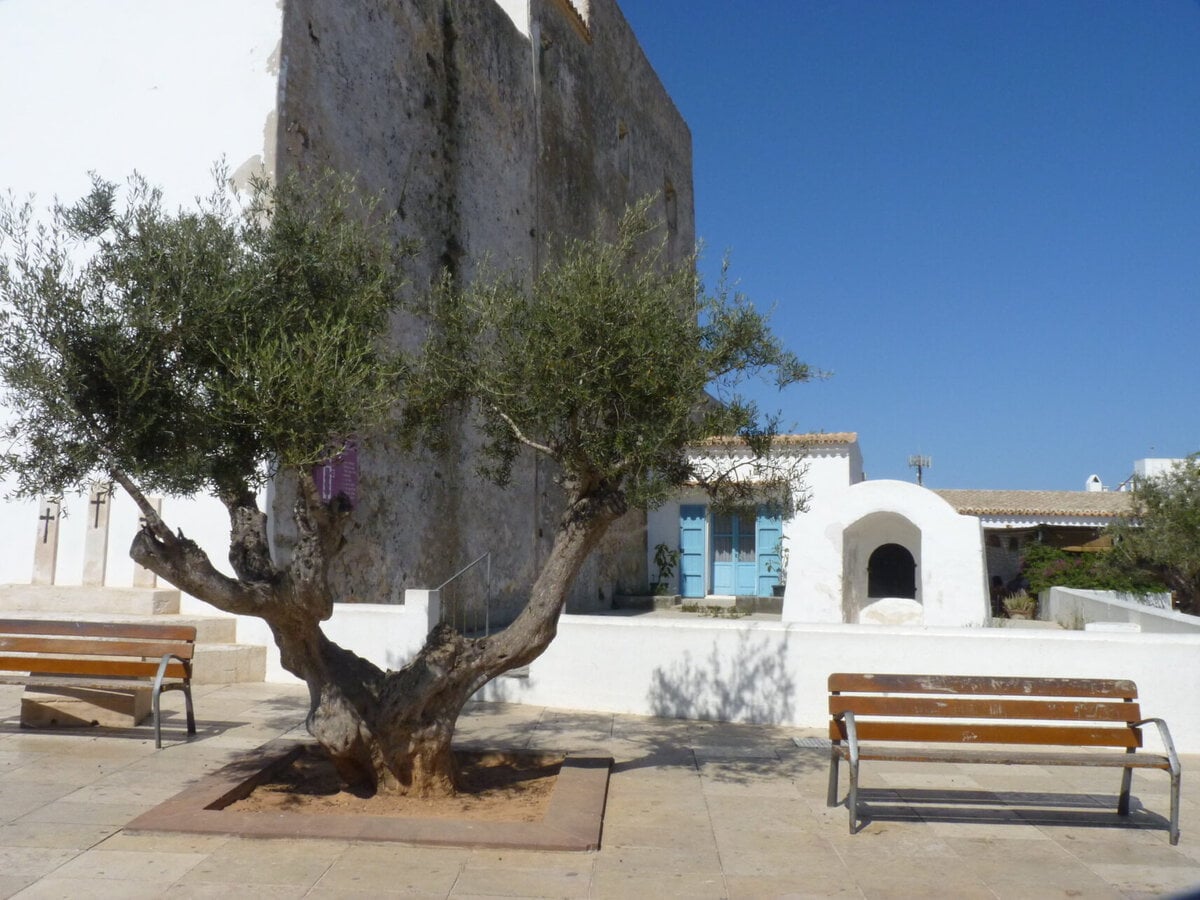
The island’s capital is a few minutes’ drive from La Savina and serves as Formentera’s quiet civic center. The main square, Plaça de sa Constitució, is fronted by the 18th-century parish church of Sant Francesc, built between 1726 and 1738. It was originally designed as a fortified refuge against pirate raids, and its door is still covered with iron plating, with a spyhole cut into it.
Also on the square is the Ethnological Museum of Formentera, home to the small locomotive that once carried salt from the island’s pans to the port. The surrounding streets hold independent boutiques, the island’s oldest bakery (Panadería Can Manolo, open since 1925), and cafés that suit a mid-morning stop. A flea market fills the garden behind the church on Tuesday and Saturday mornings, from 10 a.m. to 2 p.m. in summer.
Es Pujols and Migjorn beach
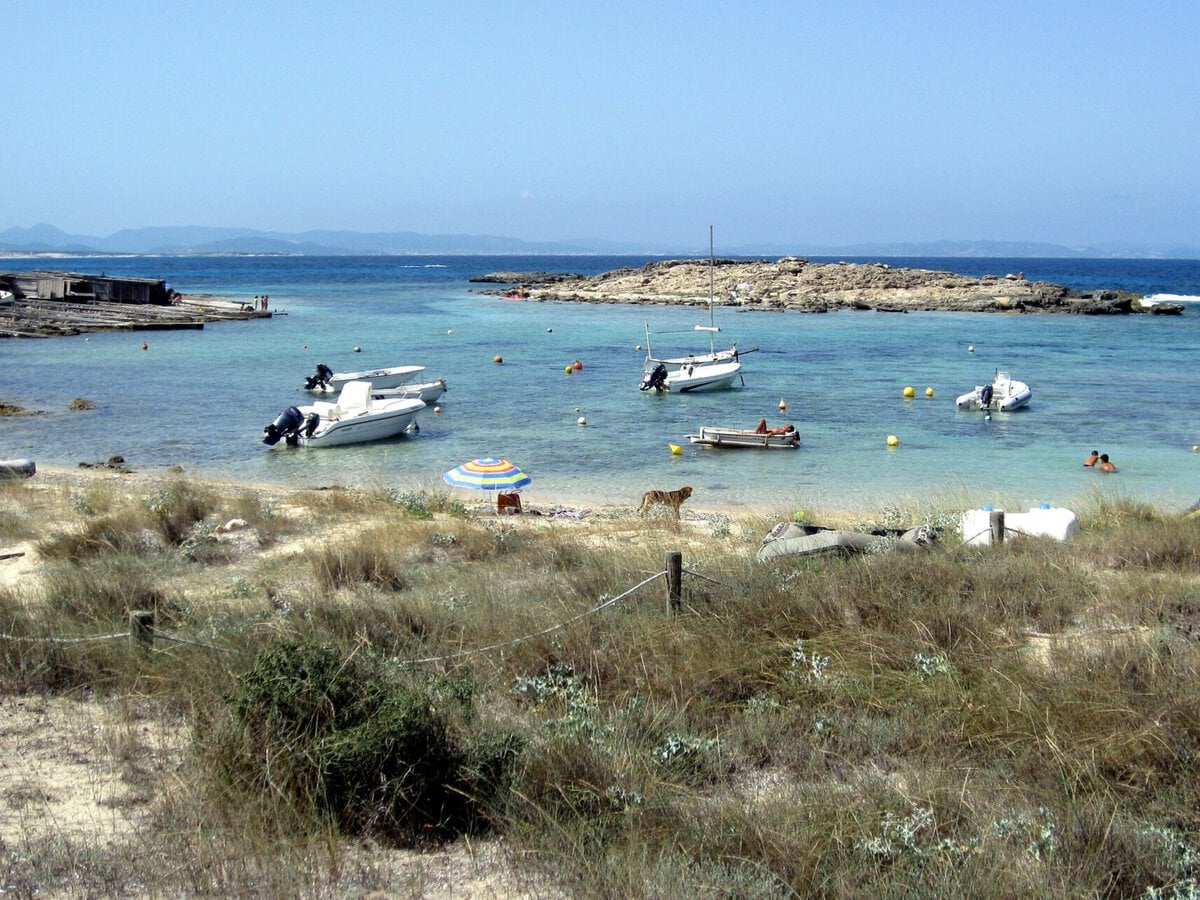
Es Pujols is the island’s main tourist village, with a short promenade, beach bars, and a calm shallow bay on the north coast. It’s accessible and family-friendly, and it works well for lunch or a mid-afternoon swim if Ses Illetes has hit capacity.
Migjorn is a long beach on the south coast, less known and less crowded than Ses Illetes, backed by low pines rather than the exposed northern dunes. Several beach restaurants and chiringuitos are spread along its length.
S’Espalmador (islet)
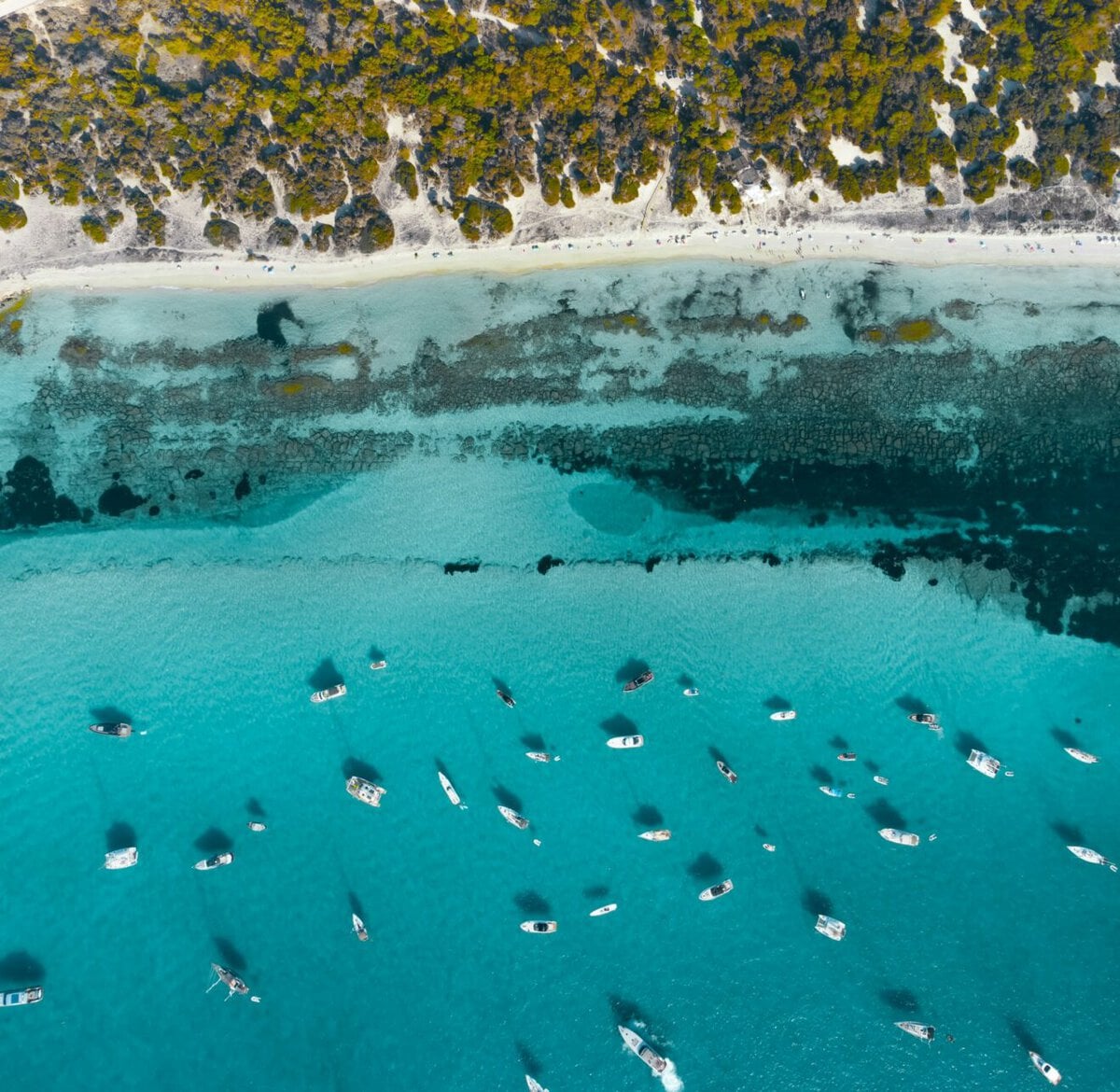
Just north of Ses Illetes, a shallow channel separates Formentera from the uninhabited islet of S’Espalmador, known for its natural mud bath and undeveloped beach. Reaching it has changed in recent years. The old scheduled Bahía passenger boat from La Savina was discontinued in 2020, and landing on the islet is now tightly regulated within the Ses Salines Natural Park.
Today, the islet is visited mainly on licensed catamaran or zodiac excursions from La Savina, which anchor offshore for short, controlled visits. Swimming across the channel from Formentera is prohibited and has proven dangerous, so it shouldn’t be attempted.
Overnight Stay or Day Trip to Formentera from Ibiza: How to Decide
A day trip to Formentera from Ibiza, arriving on an early ferry around 07:00 to 08:00 and returning on a late evening sailing, is enough to cover Ses Illetes, one of the lighthouses, a village stop, and lunch. The island’s longest road runs about 20 km end to end, and on a scooter, the whole perimeter is manageable in a single day.
What a day trip doesn’t give you is the hour after the last day-trippers leave. By early evening, Formentera’s beaches go quiet in a way they simply don’t during the day. Staying overnight, even for one night, means a sunset from Cap de Barbaria without a crowd, an early morning swim before the ferries arrive, and dinner in Sant Francesc after the day-trippers have gone home.
Here’s the practical difference between the two.
| Day trip | Overnight (1–2 nights) | |
| Timing | First ferry out, last or second-to-last back | Flexible arrival and departure |
| Transport | Scooter or e-bike best | Car more useful for luggage |
| Beach access | Arrive early at Ses Illetes to beat the crowds | Easy early morning access |
| Atmosphere | Shared with day-trippers | Island quiets after about 18:00 |
| Suits | Ibiza-based travelers adding a day | Anyone who wants a slower pace |
| Best months | May, June, September, October | Same, plus July and August if booked far ahead |
Practical Information
Planning a day trip to Formentera from Ibiza? The table below covers the key logistics.
| Crossing time | 25 to 45 minutes, varies by operator |
| Operators | Balearia, Trasmapi, Formentera Lines (formerly Mediterránea Pitiusa), Aquabus |
| Daily frequency | Up to around 47 sailings per day in high season, reduced in winter |
| Timetable | Early morning to late night in summer; check operators for current low-season times |
| Adult return fare | May, June, September and October for lighter crowds |
| Foot passenger check-in | 15 minutes before departure |
| Vehicle check-in | 30 minutes before departure |
| Best months | May, June, September, October for lighter crowds |
| Ses Illetes access controls | Active May 10 to October 15, 2026. Arrive early or come by bike |
| Cap de Barbaria vehicle access | Restricted May 15 to October 15, 2026. About a 2 km walk from the parking area to the lighthouse |
Frequently Asked Questions
How long does the ferry from Ibiza to Formentera take?
Fast ferries from Balearia and Trasmapi complete the crossing in roughly 25 to 30 minutes. Formentera Lines takes around 30 to 40 minutes, and Aquabus takes around 45 minutes. The price difference between operators is modest, so the choice often comes down to departure timing rather than speed.
Do I need to book the ferry in advance?
For foot passengers in shoulder season (May, June, September, October), buying a ticket at the port on the day is usually fine. In July and August, same-day tickets for the last evening ferries back to Ibiza can sell out, so booking at least the return leg online ahead is recommended in peak weeks. Vehicle spaces need advance booking throughout the summer.
Can I take a scooter or a car from Ibiza to Formentera on the ferry?
Yes. Most operators carry vehicles, including cars, scooters, and bicycles. Vehicle space is limited, so book ahead in high season. Renting on arrival in La Savina is just as easy, with scooter rentals available right outside the port for around €25-€35 per day. Bear in mind that a private vehicle brought over from Ibiza needs a Formentera eco permit between June and September, while a local rental does not.
Is a day trip to Formentera from Ibiza worth it?
A full day is enough to see Ses Illetes, one lighthouse, and Sant Francesc Xavier at a relaxed pace. The island is small, with the main road running about 20 km end to end, and a scooter makes the main points accessible within a single day. Those who stay overnight consistently say the island feels like a different place once the day-trippers leave.
When is the best time to visit Formentera to avoid crowds?
May, June, and September give the best balance of warm weather, open businesses, and manageable crowds. July and August are the busiest months, with the Ses Illetes access controls in full effect and ferry services stretched to capacity. October is quieter and still mild, though some accommodations and restaurants begin to close.
Are there access restrictions at the beaches?
Yes. Ses Illetes and Llevant, both inside the Ses Salines Natural Park, have vehicle access controls from May 10 to October 15, 2026, with a maximum of 384 cars and 1,132 motorcycles. Pedestrians, cyclists, and zero-emission vehicles enter free, and hybrids get a 50% discount. Cap de Barbaria has a vehicle barrier from May 15 to October 15. Visitors park about 2 km from the lighthouse and walk in. Quad bikes are banned throughout the natural park.
Related articles: