Trump just posted what may be the most aggressively pro-prediction-market presidential rant in modern American history — a sentence that somehow exists now.
In a sprawling Truth Social post, President Donald Trump threw his full support behind prediction markets, declared America the “Crypto Capital of the World,” praised his handpicked CFTC chair, attacked blue-state regulators, and effectively told the gambling-law crowd to get lost.
“It is critically important that the CFTC’s exclusive authority over Prediction Markets is maintained, and that they will thrive,” Trump wrote Monday, framing the industry not as online betting with extra spreadsheets, but as a patriotic financial innovation project.
And just in case anyone missed the message, Trump added that prediction markets are a “new form of Financial Market” that other countries are “after,” because apparently the global race for dominance now includes both artificial intelligence and betting on whether Taylor Swift will attend the Super Bowl.
The post marks Trump’s clearest endorsement yet of the prediction market industry’s favorite legal argument that these platforms are financial exchanges, not sportsbooks in fintech cosplay, and therefore belong under the jurisdiction of the Commodity Futures Trading Commission — not state gambling regulators.
This comes as states across the country have increasingly started looking at prediction markets and asking the uncomfortable question everyone eventually asks after seeing people trade contracts on election outcomes and NBA finals odds: “Wait, isn’t this just gambling with Bloomberg terminals?”
The industry insists the answer is no.
Prediction market firms like Kalshi and Polymarket argue their event contracts function more like federally regulated derivatives than casino wagers. Critics, meanwhile, look at markets predicting presidential elections, inflation numbers, and sports outcomes and conclude society has somehow invented Robinhood for vibes.
Trump, unsurprisingly, is firmly in the first camp.
Enter the CFTC avengers
Trump also reserved special praise for CFTC Chairman Michael Selig, calling him “respected by all” and saying he is “doing a great job.”
In crypto and prediction-market circles, Selig has become something of a folk hero — the rare regulator who doesn’t immediately react to new financial technology the way suburban dads react to TikTok.
His leadership has coincided with a noticeably friendlier federal posture toward prediction markets and digital assets, despite the legal fight over these platforms escalating quickly.
Minnesota recently emerged as one of the first major battlegrounds after state officials attempted to crack down on prediction market activity through gambling enforcement measures. The federal government responded by suing to block the effort, turning what might once have been a niche regulatory dispute into a constitutional cage match over federal preemption.
In plain English: states say “this looks like betting,” while prediction companies say “actually this is sophisticated financial forecasting,” which is a very elegant way of saying people are wagering on the future with charts open.
Trump versus the anti-prediction markets coalition
Naturally, Trump’s post quickly escalated from policy statement to political flamethrower.
“We cannot have SCUM like Chris Christie, Letitia James, Tim Walz, and JB Pritzker setting the rules!” Trump wrote, with the sort of capitalization strategy usually reserved for Facebook comments under local-news articles.
New York Attorney General Letitia James has aggressively pursued crypto firms, while governors like Walz and Pritzker have become symbols of state-level regulatory pushback against newer forms of online financial speculation.
To prediction-market supporters, these officials represent an old regulatory worldview trying to shove internet-native financial products into gambling frameworks written when “online betting” meant office March Madness pools.
To critics, however, prediction markets increasingly resemble sportsbooks wearing Patagonia vests.
Prediction markets live in a weird legal uncanny valley between finance and gambling. Users buy and sell contracts tied to future events such as elections, inflation reports, sports outcomes, geopolitical developments. Prices then fluctuate based on probability estimates. Supporters argue these markets improve forecasting and price discovery. However, critics argue they improve the experience of losing money while pretending to be Nate Silver.
The crypto connection gets louder
Trump’s post also suggests that prediction markets are rapidly becoming part of the broader MAGA-tech-finance universe.
Trump explicitly tied the industry to crypto competitiveness, writing that America must remain dominant as “the Crypto (Bitcoin, etc.) Capital of the World.”
Prediction markets increasingly run on crypto infrastructure, stablecoins, and blockchain payment rails. Polymarket, in particular, became one of the defining speculative platforms of the 2024 election cycle, where political junkies, degenerate traders, and extremely online economists all gathered to collectively reinvent election-night anxiety in financial form.
The political connections run deeper, too.
Donald Trump Jr. has ties to both Polymarket and Kalshi, while Trump Media has reportedly explored prediction-market-related ventures tied to Crypto.com. Meanwhile, former Kalshi board member Brian Quintenz had been floated for major regulatory roles.
At this point, the line between fintech startup ecosystem and political coalition is becoming increasingly blurry.
The bigger fight
Underneath the insults, crypto references, and all-caps theatrics is a genuinely consequential legal battle.
If courts ultimately side with the prediction market industry, the CFTC could emerge as the dominant regulator for a category of event-based trading. If states win, prediction markets may face a fragmented patchwork of gambling laws that could dramatically limit growth.
And it appears that the White House no longer sees prediction markets as a weird internet side project populated by poker players and election obsessives. It sees them as finance.
Or at least finance adjacent enough to become part of America’s ongoing culture war over crypto, regulation, innovation, and who gets to profit from humanity’s increasingly unstoppable urge to bet on literally everything.
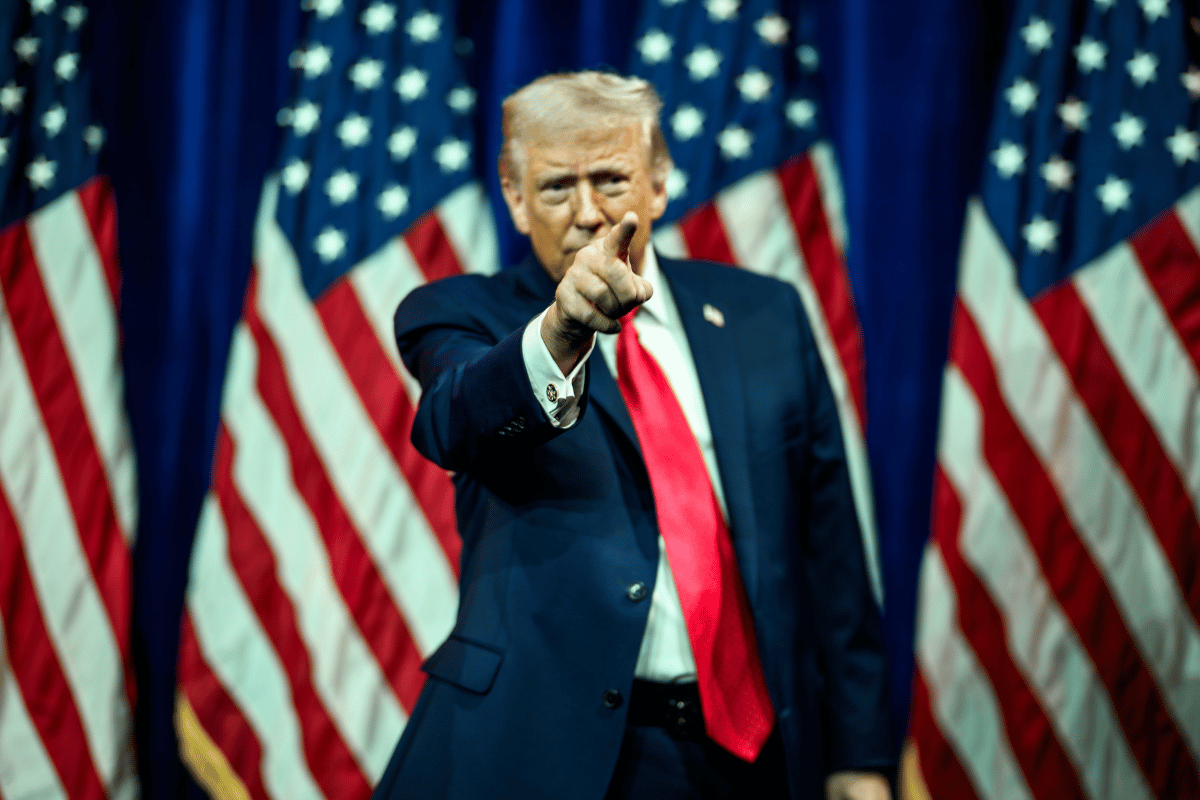
Featured image: Donald Trump via RawPixel