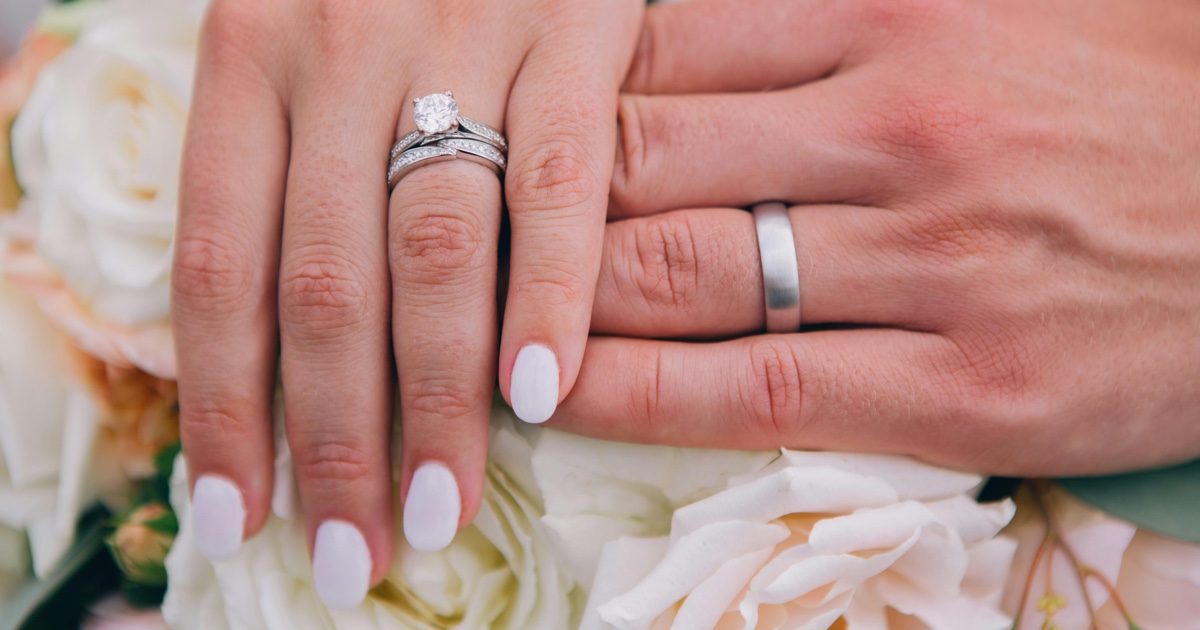
There’s a certain kind of design choice that doesn’t need to announce itself to be understood. It settles in quietly, then refuses to feel out of place ever again. When it comes to timeless jewelry, some things find their place so naturally that, in hindsight, it feels almost inevitable.
White gold rings have that quality. The circumstances that brought them to prominence were specific. Rooted in a particular moment in history, in a shortage nobody planned for, and in a design movement that happened to need exactly what the material could offer.
How that happened is worth sitting with since it reveals something genuine about the material itself, and about why an entire century of jewelry culture decided, almost instinctively, that white gold was what it had been looking for.
A Metal Born from Necessity

White gold isn’t found in the ground. Someone had to invent it. It’s an alloy of pure gold combined with white metals like palladium, nickel, or silver, and the result is a material that keeps what makes gold valuable while gaining a cooler, more silvery tone that pure gold simply cannot produce on its own.
The Early Twentieth Century and the Search for Platinum
The story starts, in part, with a shortage. By the late nineteenth century, platinum had become the metal of choice in fine jewelry. It was dense, cool-toned, and had a useful tendency to disappear behind a stone rather than compete with it.
For the craftspeople of the era, it was the closest thing to a perfect material the market had yet offered. Then the First World War happened, and platinum was reclassified as a strategic military resource in several countries, which effectively pulled it off the jewelry market overnight.
The industry needed something that could do what platinum did visually, at least, without the same scarcity problem. White gold stepped into that gap. It started as a workaround, which is an unglamorous origin for something that would go on to define a century of ring design.
But it turned out to have genuine advantages of its own: lighter than platinum, easier to work with, and precise enough to satisfy the increasingly geometric demands of Art Deco design.
By the 1920s, it had stopped being a substitute and started being a preference.
What the Twentieth Century Asked of Jewelry

The cultural mood of the twentieth century turned out to be a good fit for white gold in ways that went beyond wartime pragmatism. As Art Nouveau gave way to Art Deco, jewelry design moved with it — away from organic flowing forms and toward clean angles, strong geometry, and stones positioned to capture as much light as possible. White gold suited that shift almost perfectly.
The Evolution of Minimalist Design and Why Less Works Better
Art Nouveau demanded organic forms, decorative density, and ornate surfaces. White gold answered by revealing the limits of excess. Its neutrality made it a quiet contrast to the period’s complexity.
Art Deco called for clean angles, strong geometry, and maximum light capture. White gold was a natural fit, with its instinctively cool tone and precision finish aligning seamlessly with the new visual language.
Mid-century modernism prized restraint as sophistication and form over decoration. Here, white gold’s neutrality became an asset, forcing the eye toward line quality and craftsmanship rather than the metal itself.
Contemporary fine jewelry treats intentional minimalism and space as a design element. White gold rises to meet this fully. The metal recedes so that craft and form speak for themselves.
The pattern across all four moments is the same: a ring that doesn’t shout forces closer attention to the precision of the finish, the quality of the line, the relationship between space and form. White gold didn’t just adapt to that expectation. It helped define it.
Tradition Absorbed into Contemporary Design

The difference between a trend and a classic comes down to one thing: a classic keeps being useful as the questions around it change. White gold rings have managed exactly that across every significant shift in jewelry design over the past century.
At Carrera y Carrera, the approach to white gold reflects that continuity naturally. The brand’s collections are built around natural forms, sculptural weight, and the conviction that jewelry belongs in the same conversation as art.
White gold fits that philosophy without friction. Its restraint creates space for the design to say what it needs to say, without the metal interrupting.
Why It Still Matters

Fashion moves in circles. Things that feel essential in one decade can feel tired in the next. White gold has mostly avoided that cycle, and the reason is straightforward: its appeal was never purely about looks. It works.
It holds stones well, acquires character rather than wear over time, and sits comfortably inside design languages as different as the sharp geometry of the 1920s and the fluid naturalism that defines much of contemporary fine jewelry.
A white gold ring made today carries all of that history quietly. It doesn’t announce it since it doesn’t need to. The credentials are there in how the metal handles light, in the level of detail it makes possible, in the understated confidence it brings to whatever design it’s part of.
That’s how a material becomes a classic. Not by being fashionable at the right moment, but by being decade after decade the right answer.