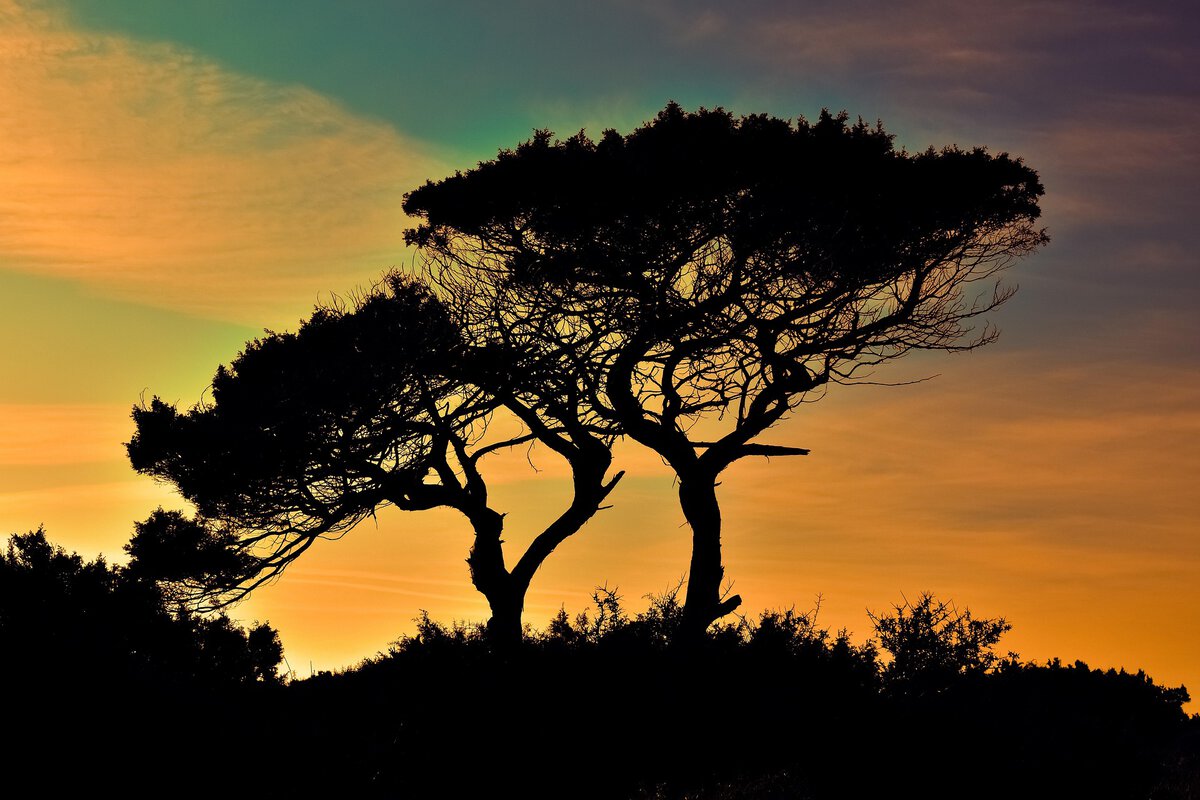
Somewhere on the road between Paphos and the Akamas Peninsula, pine resin drifts through the open window, the coast appears below, and the day has no schedule. That is the argument for Cyprus by campervan.
The island measures roughly 240 km east to west, and inside that space you move between Roman mosaics, mountain forest, beach coves, and stone villages in under an hour of driving.
The rules deserve your attention before the freedom does. Cyprus regulates camping firmly, runs a small network of official campsites, and drives on the left. This guide covers the legal side first, then the campsites and the practical realities of the road. For route ideas once the van is sorted, our Cyprus road trip itinerary picks up where this guide leaves off.
Is Wild Camping Legal in Cyprus?
The short answer is no. In state forests, the penalties are heavier than most travelers expect.
Camping in State Forests
Cyprus’s Forestry Department restated the position in August 2025: camping in state forests outside designated sites, without a permit, is illegal and punishable by up to one year in prison or a fine of up to €5,000. The reminder followed a summer spike in illegal camping in protected areas, the Akamas forest among them.
Fire is treated far more severely. Lighting a fire inside a state forest, or within two kilometers of its boundary, outside designated barbecue spots carries up to 12 years in prison, a fine of up to €100,000, or both. Enforcement is real. If you see smoke or flames in forest land, call the Forestry Department on 1407 or the emergency line 112.
Greece’s Motorhome Ban Does Not Apply in Cyprus
Travelers regularly mix up two sets of rules. Greece introduced a sweeping motorhome camping ban in 2025 (Law 5170/2025), with €300 on-the-spot fines for sleeping in a parked campervan outside campsites. That law applies in Greece only. Cyprus is a separate jurisdiction with its own forest law and no equivalent blanket parking ban, so you will not be fined €300 simply for parking your van near a beach the way you might be on a Greek island.
Overnight Parking Outside the Forests
Away from forest land, the picture is more nuanced. Setting up camp on a beach, staying overnight in a national park, or blocking a public road is illegal. Enforcement varies with the season. Between October and April, informal overnight stops in coastal areas are widely tolerated. In July and August, patrols increase and tolerance shrinks, particularly near popular beaches and protected areas.
The Practical Do’s and Don’ts
- Do use designated campsites, especially in the Troodos forest area.
- Do check with the campsite or the local forestry office before pitching anywhere near forest land.
- Do call 1407 if you see fire or smoke in the forests.
- Don’t light fires anywhere outside a designated barbecue area.
- Don’t camp in the Akamas forest, state forests, or protected areas at any time of year.
- Don’t assume a quiet coastal spot is fair game in July or August.
The Official Campsites in Cyprus
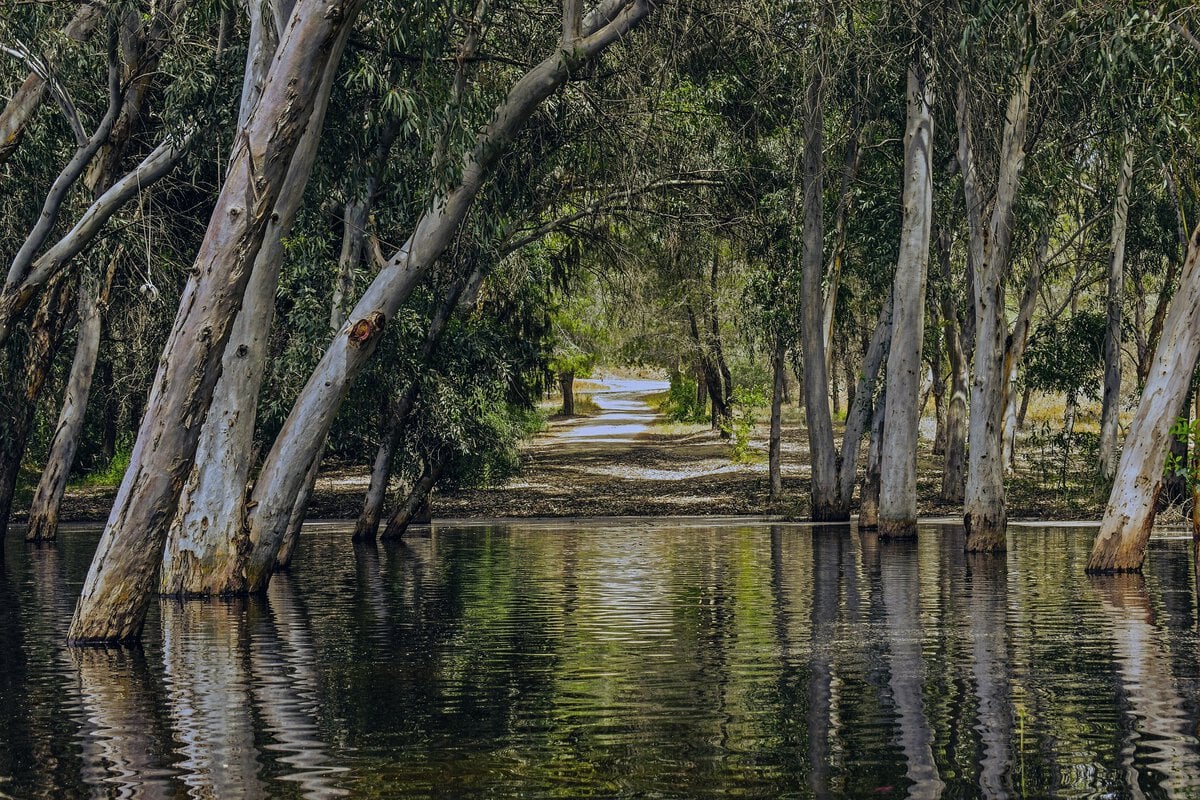
Morning at the Polis campground starts with light filtering through eucalyptus and the sound of a calm sea a short walk from your door.
Cyprus has six main campsites that take campervans and caravans: three on the coast and three in the mountains. The Forestry Department runs the forest sites, while the coastal ones sit on state or municipal land or operate privately.
Coastal Campsites
Polis Chrysochous
The northwest’s base camp, and one of the best-positioned sites on the island. The campground sits on the beach in a eucalyptus grove, 500 meters from the center of Polis town, with room for 200 tents and caravans. Facilities include toilets, showers, a snack bar, and a mini market open June to August; a laundromat is a short walk away in town. A lifeguard watches the beach from 10am to 6pm.
Open March to the end of October.
Tel: +357 26815080
A natural base for the Akamas Peninsula and the Baths of Aphrodite.
Feggari Camping (Coral Bay, Paphos)
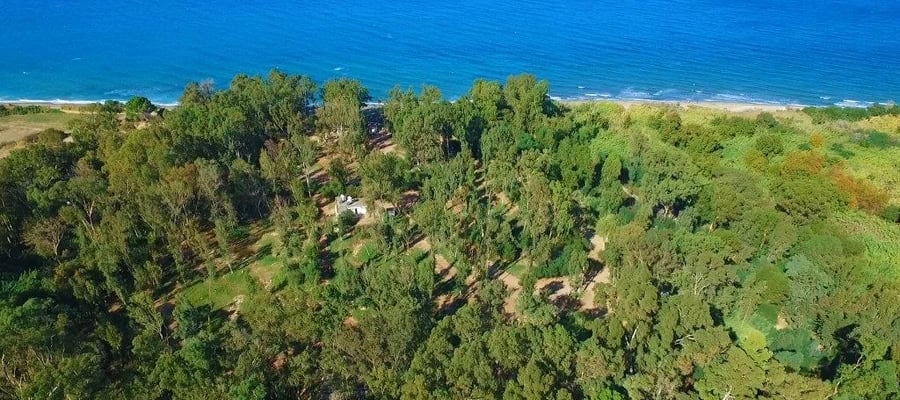
In the heart of Coral Bay, 11 km north of Paphos, this privately run site stays open all year and fits 47 tents or caravans. For its size, the facilities are thorough: toilets, showers, hot water, barbecue, a kitchenette, electricity hook-ups, a bar, a restaurant, and Wi-Fi.
Coastal sites that stay open past October are rare here, and that alone makes Feggari one of the most practical choices on the island.
Tel: +357 26621534
Governor’s Beach Kalymnos (Limassol District)
The largest campsite in Cyprus, with 360 pitches for tents and caravans, open all year. It sits on the beach roughly 20 km east of Limassol, just off the Limassol–Nicosia motorway. Facilities include toilets, showers, a coin-operated laundromat with dryers, and a restaurant, plus an on-site supermarket in July and August. The beach is unusual for Cyprus: dark volcanic sand under white limestone cliffs.
Tel: +357 25632300
Mountain Campsites (Troodos Region)
Platania
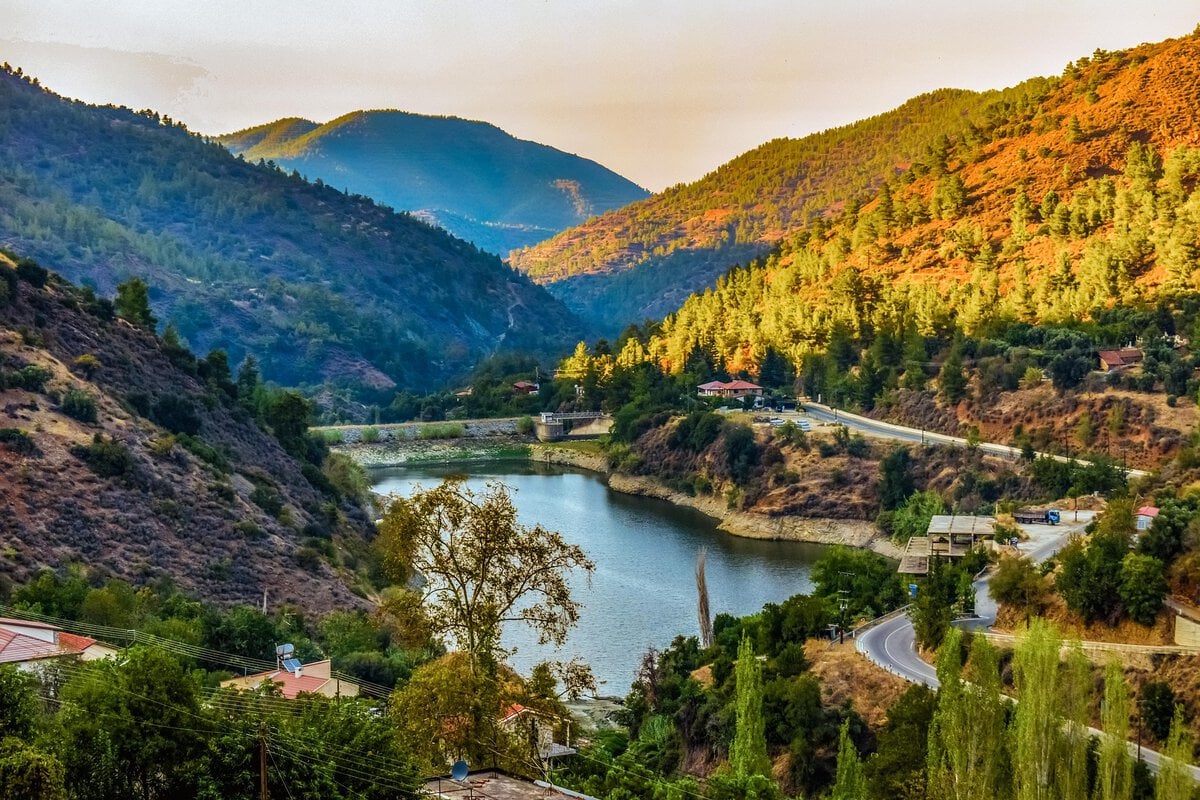
At 1,100 m on the Kakopetria–Troodos road, Platania is the most comprehensively equipped of the forest campsites. It has 18 toilet and shower blocks, kitchen facilities, disabled access, picnic tables, and children’s play areas. A canteen nearby sells basics. The Forestry Department lists capacity at 150 caravans and up to 600 people.
Open May to the end of September.
€5 per night for a caravan.
Tel: +357 22608503
Kampi tou Kalogyrou
At 1,540 m, the highest campsite on the island. The air stays cool even in midsummer and the pine forest is dense. The site sits on the Platres–Prodromos road, about 4 km from Trooditissa and 3 km from Prodromos, and fits 80 tents or caravans. Facilities are basic: toilets, drinking water, barbecues, no showers.
Open June to September.
€2 per person.
Tel: +357 25421422
Stavros tis Psokas
The most remote site on this list, and arguably the most beautiful. It sits in the heart of the Paphos forest at 820–900 m, about 34 km from Polis Chrysochous, next to the Stavros tis Psokas forest station. The access roads are earthen tracks. So this is not the place to take a large motorhome. Capacity is 60 tents plus 6–7 caravans, with toilets, showers, two small cooking stations, and a small café-restaurant. Cypriot mouflon, the island’s wild sheep, live in an enclosure nearby, and Cedar Valley is about 19 km away.
Unusually for a mountain site, it stays open all year.
Tel: +357 99638197
Campsite Quick Reference
| Polis Chrysochous | Northwest coast | Mar–Oct | 200 | Showers, snack bar, lifeguard |
| Feggari (Coral Bay) | Paphos coast | Year-round | 47 | Electricity, Wi-Fi, bar, restaurant |
| Governor’s Beach Kalymnos | Limassol east | Year-round | 360 | Laundromat, restaurant |
| Platania | Troodos, 1,100 m | May–Sep | 150 caravans | Showers, kitchen, disabled access |
| Kampi tou Kalogyrou | Troodos, 1,540 m | Jun–Sep | 80 | Toilets, water, BBQ only |
| Stavros tis Psokas | Paphos forest, 900 m | Year-round | 60 tents + caravans | Showers, kitchen, café |
Practical Campervan Tips for Cyprus
Best Time to Go
April through June is the sweet spot. Temperatures sit in the low-to-mid 20s, wildflowers cover the hillsides, the sea is warm enough from mid-May, and the coastal campsites still have room.
September and October behave similarly: warm days, cooler nights, emptier roads, and the sea at its warmest, around 27°C.
July and August are hot. Coastal temperatures regularly reach 35–38°C, and nights inside a poorly ventilated van are difficult. If you travel in peak summer, head up. Kampi tou Kalogyrou sits at 1,540 m and runs roughly 10–15°C cooler than the coast. Air conditioning is worth prioritizing when you choose a vehicle.
Winter, November through March, is underrated. Coastal temperatures stay around 12–18°C, Governor’s Beach and Feggari remain open, and large parts of the island are close to empty. Snow falls on the Troodos in December and January, enough for a small ski operation, while the coast stays mild.
Driving in Cyprus
The first roundabout is the test. Cyprus drives on the left, a legacy of British rule, and shares that habit with only one other Mediterranean country, Malta. Coming from continental Europe or North America, give yourself a full day to adjust before tackling narrow mountain roads.
Speed limits: 100 km/h on motorways, 80 km/h on rural roads, 50 km/h in towns. Enforcement is active, with fixed cameras on several motorway sections and mobile camera vans island-wide. There are no toll roads.
Motorways and main A-roads are in good condition. Secondary B-roads and village routes vary from excellent to patchy tarmac with gravel at the bends. Troodos mountain roads are narrow and winding; sound your horn on blind corners, where uphill traffic has priority, and take them slowly. Large motorhomes do not fit the historic centers of Limassol, Larnaca, Paphos, or Nicosia. Park at the edge and walk in.
Three local quirks: unmarked speed bumps appear in villages without warning signs, stray cats cross the roads at night everywhere, and a few times each year Saharan dust cuts motorway visibility to 50 m. If the sky turns orange, put your hazard lights on and slow right down.
LPG (Autogas)
Autogas has been legal in Cyprus since 2016. Coverage is thin compared with northern Europe, but it exists. EKO runs autogas pumps in several locations including Kato Paphos and Nicosia, and Petrolina/Eni has licensed stations in Nicosia (Larnakos Avenue), Limassol (Franklin Roosevelt Avenue), and Paralimni. At the time of writing, autogas costs around €0.98 per liter, against roughly €1.50 for petrol and €1.62 for diesel.
Filling gas cylinders directly at autogas pumps is not permitted at most stations. Only direct-fill cylinders with an 80% shut-off valve, such as Gaslow or Safefill, are compatible, so check your system before you travel. With this few stations on the island, fill up whenever you pass one.
Water, Waste, and Electricity
All six main campsites have drinking water. The remote forest sites, Stavros tis Psokas among them, take theirs from mountain sources. Tap water across Cyprus is safe, though the mineral taste puts many visitors off; most people buy bottled water for drinking and use the tap for cooking and washing.
Wastewater disposal is straightforward at organized sites, which all have drainage. Dumping grey water on public land or beaches is prohibited. Cyprus has no dedicated motorhome service points of the French or German “aire” type, so campsites are your only reliable disposal option.
Electrical hook-ups, where available, use UK-style Type G three-pin sockets. A campervan wired with European Schuko plugs needs a UK-to-EU adapter. Easy to overlook, easy to fix before you leave home.
Local Customs and the Green Line
Cypriot hospitality is relaxed and real. Park near a village café and the owner may well wave you in for a coffee with no expectation beyond conversation. Tipping runs around 10% and is appreciated rather than required.
The Green Line separates the Republic of Cyprus in the south from the northern part of the island. Rental vehicles, campervans included, typically cannot cross the checkpoints, so check your rental agreement before planning anything on the northern side.
Emergency numbers: 112 is the general emergency line (199 also works in Cyprus). For fire or smoke in forest areas, call the Forestry Department directly on 1407.
Renting a Campervan in Cyprus
Most campervan rental companies in Cyprus operate out of Limassol, with pick-up also available at Larnaca Airport, Paphos Airport, Nicosia, and Ayia Napa. A standard 2-berth campervan starts from around €79 per day, a mid-range camper with air conditioning from around €109, and a larger family motorhome from around €179. A regular 2WD campervan handles every tourist route on the island, Troodos included; you do not need a 4×4 for Cyprus.
To compare options and prices in one place, see campervan rental in Cyprus via Campervan Planet.
Before You Go
Carry enough water for a full day between resupply points, especially when heading toward Stavros tis Psokas. Fill the fuel tank before mountain drives; stations thin out above Kakopetria. Two weeks covers the whole island at an easy pace, and even a long weekend gets you further than the island’s size suggests.
Frequently Asked Questions
Do I need to book Cyprus campsites in advance? In July and August, yes for the coastal sites. Feggari and Governor’s Beach fill quickly in peak season, so call ahead. The Forestry Department mountain sites work on a first-come basis, and outside high summer you will nearly always find space.
Do I need a special license to drive a campervan in Cyprus? No. A standard EU or international driving license covers campervans and motorhomes up to 3.5 tonnes. Heavier vehicles require a category C license, but almost no rental campervan in Cyprus falls into that class.
Is there a campsite at Troodos itself? Yes. Beyond the six main sites, the Forestry Department runs a campsite at 1,600 m on the Karvounas–Troodos road, open May to the end of October, weather permitting. It holds up to 170 tents and caravans and puts you within walking distance of the trails around Mount Olympus.
Are campfires allowed at Cyprus campsites? Open fires are banned everywhere in and near forest land, including at the campsites themselves. Use the fixed barbecue stations that the Forestry Department sites provide, and bring a gas stove for everything else. The fire rules apply year-round, not only in summer.
Can I visit the north of the island if my rental campervan can’t cross? Yes, on foot. Park in south Nicosia and walk across at the Ledra Street pedestrian crossing with your passport. Day visits are straightforward, and the van stays on the southern side.
When is the cheapest time to rent a campervan in Cyprus? May, early June, September, and October combine lower rates with the best camping weather. July and August carry peak pricing and limited availability, so if summer is your only window, book several weeks ahead.