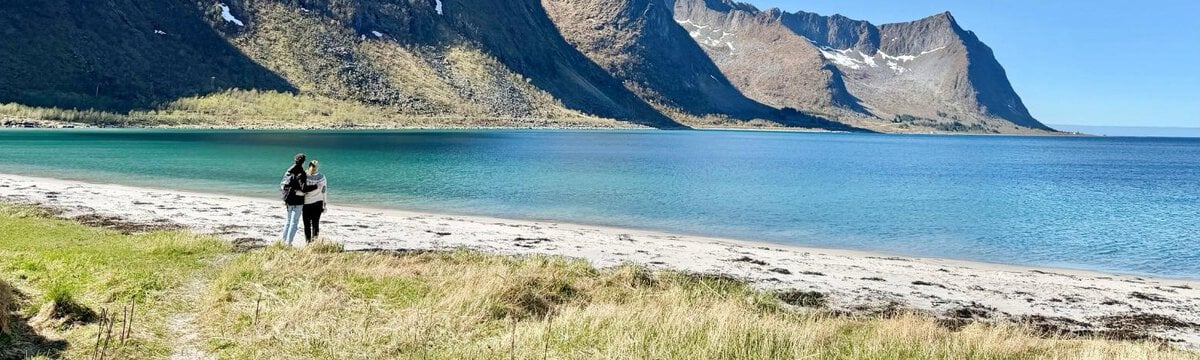
Ask us to name our favorite place on Earth for outdoor adventure, and we’ll say Northern Norway without even thinking about it. We’ve gone to New Zealand, to Iceland, to the French Alps, and to the Canadian Rockies. We come back to Norway every time.
We’ve taken Lofoten’s icy roads, trying to get away from the clouds for the northern lights. We’ve dog-sledded in Alta. We’ve eaten a truly embarrassing amount of waffles and brunost in Tromsø. We’ve hiked Senja’s insane-looking peaks. We’ve floated in a sauna in Bodø at dawn. We’ve had a snowmobile wreck on a Svalbard glacier at -38ºC.
One thing worth knowing before you start planning: a large part of what’s called “Northern Norway”, including Tromsø, Alta, and all of Finnmark, sits within Sápmi, the traditional homeland of the Sámi people, Europe’s only recognized indigenous population. Their reindeer herding, joik music, and connection to this landscape are a vital part of everything up there, and the region is so much richer for it.
This Northern Norway trip guide covers the destinations we know best: Bodø, the Lofoten Islands, Tromsø and Kvaløya, Senja, Alta, the Far North, and Svalbard. All of it is extraordinary.
A Note on Norwegian Hiking Grades
Before we talk about specific hikes, it matters enough to say upfront: Norwegian trail grades run significantly harder than what you’d expect in most other countries. The Norwegian Trekking Association (DNT) uses a four-color scale: green for easy and family-friendly, blue for moderate, red for demanding, and black for expert terrain. A blue trail here often involves sustained steep climbing on rocky terrain. Red often means some scrambling. What a Norwegian local calls “a Sunday stroll” will humble most international hikers.
Norwegian time estimates on trail signs also consistently underestimate how long it takes people who haven’t grown up doing this. Budget extra time on every route, especially if conditions are wet (and for the pictures). And check yr.no for the weather. It’s significantly more accurate than any other tool for Norwegian mountain forecasts.
For winter mountain hiking with skis or snowshoes, we highly recommend a guide.
Finally, exercise extreme caution and good judgment when there’s snow and ice on the trails. Wear proper footwear, layers, food and water. Always ask locals about the current conditions, and check the latest recommendations online or at a local tourist office.
Related read: Norway Tips for First-Time Visitors
Bodø: the Entry Point Everyone Ignores
Most people arrive in Bodø on the way to somewhere else. We understand that. We also stayed for two days once, on our way to and from Lofoten, and ended up charmed by the place.
Bodø sits just above the Arctic Circle on a peninsula surrounded by fjords and mountains, and it’s absolutely underrated. You can walk from the airport to the city center in fifteen minutes. In 2024, it became the European Capital of Culture, the first one ever north of the Arctic Circle.
The main outdoor experience outside town, besides fantastic hiking possibilities and turquoise-water beaches, is Saltstraumen, half an hour’s drive away: the world’s strongest tidal current, with 400 million cubic meters of water pushing through a narrow strait every six hours. A RIB boat tour takes you through it from the water, which is considerably more intense. Sea eagles work the currents overhead.
From Bodø, the ferry to Lofoten is one of the greatest maritime arrivals in Norway: the islands emerge from the sea as a wall of imposing peaks. Take the ferry at least once, in whatever direction. It’s part of the experience.
Lofoten Islands: The One That Lives Up to its Reputation
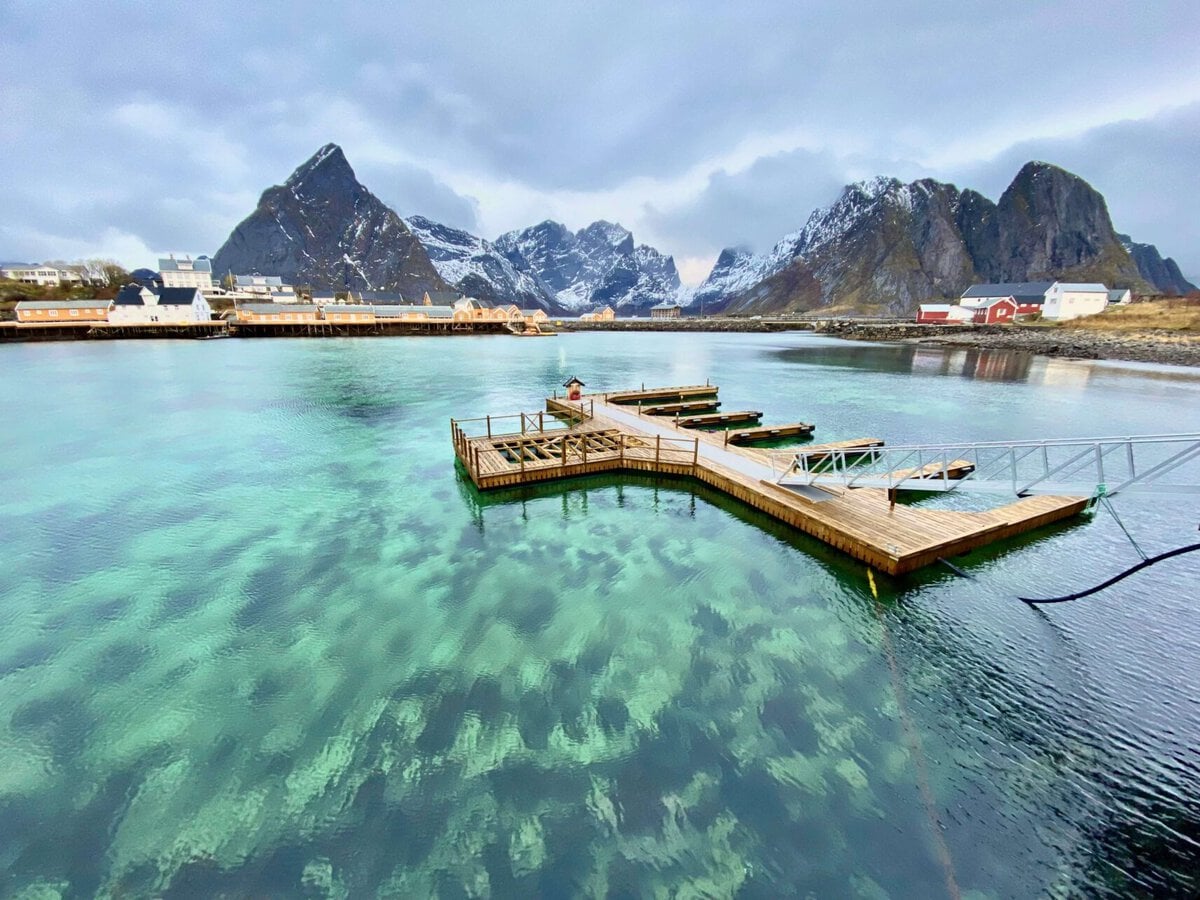
In our humble opinion, Lofoten is one of the most beautiful places on earth. Mountains that rise straight from the sea to 1,000 meters, red fishing cabins, white sand beaches with turquoise surf and snow on the peaks behind them. The Instagram version is not lying. It’s just leaving a lot out, and it’s unfortunately drawing too many tourists, especially in summer. Go off-season, and you won’t regret it.
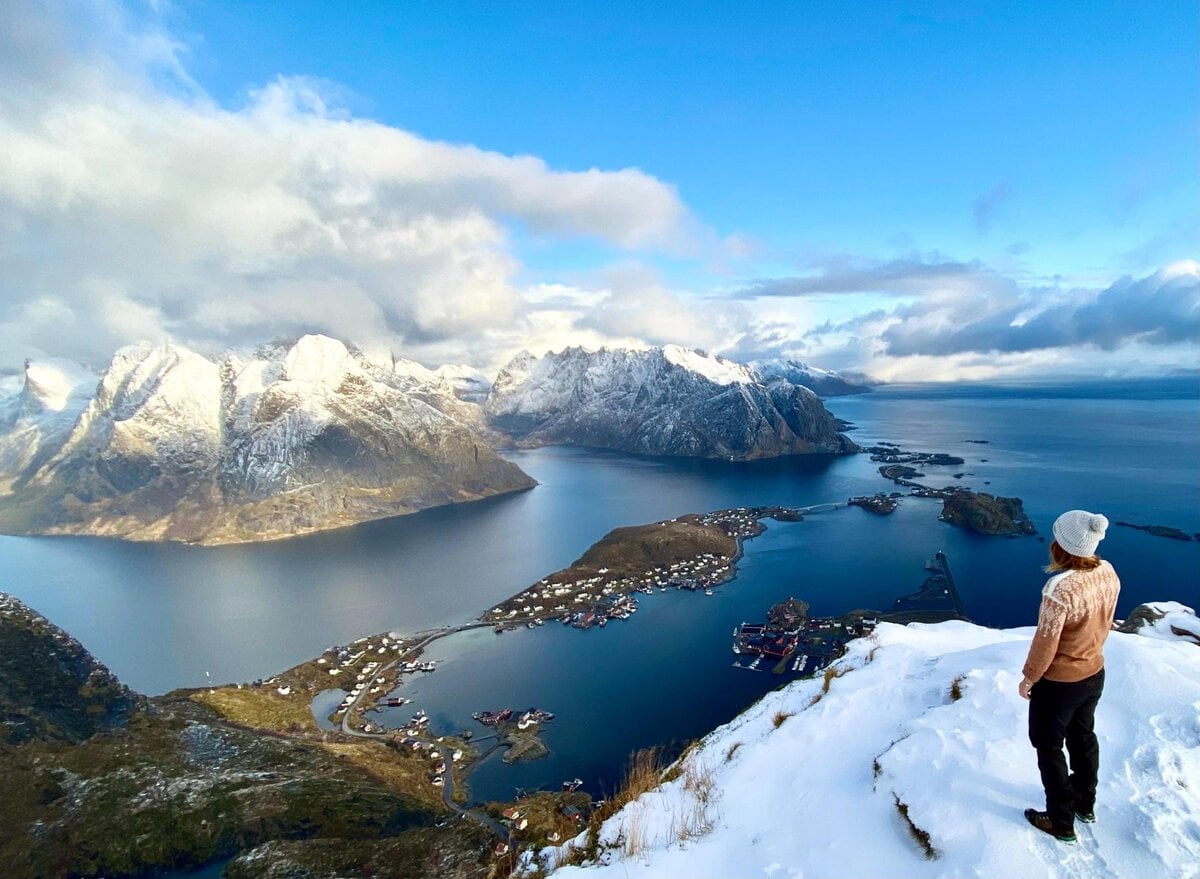
This is where the Norwegian trail grade note above really applies. Lofoten’s hikes are serious. Reinebringen, above Reine, is the classic, and the view from the summit, across Reine village and the fjord and the peaks in every direction, earns every one of the nearly 2,000 stone steps that take you up.
Ryten, further west on Flakstadøy, is less crowded and arguably more dramatic. From the summit, you look straight down at Kvalvika beach, a crescent of white sand accessible only on foot. The combination of summit ridge and wild beach in a single outing is one of the more satisfying days you can have in Norway.
Hiking
Reinebringen in particular becomes genuinely dangerous in winter, with icy steps and avalanche risk on the summit ridge. If you’re coming between October and April, check current conditions (there’s a Facebook group) and never underestimate the terrain.
On the water
In winter, you can go whale-watching, when orcas and humpbacks follow the herring migration from late October through January.
Sea eagle safaris run year-round from Svolvær: a RIB boat heads into the fjords, fish goes in the water, and Europe’s largest eagles come down to take it.
Kayaking under the midnight sun in June is a unique experience. Paddling across a still fjord at 1am, with the sun sitting on the horizon and the reflections of the peaks going down into the water beneath you.
Surfing at Unstad
Unstad is one of the world’s northernmost surf beaches, and it helped put cold-water Arctic surfing on the map. Surfers in thick wetsuits are doing things that seem improbable at this latitude. The surf school there has full equipment rental, so you can arrive without a board. The best waves are in autumn and winter when the crowds are gone and the swells are biggest. Summer is more beginner-friendly and significantly more crowded.
The fishing heritage
Lofoten’s entire identity was built on cod. The Lofotfisket, the annual cod migration, has drawn fishermen to these islands since the Viking age, and staying in a rorbu (a traditional fisherman’s cabin on stilts over the water) is still the most genuine way to experience that history. Modern rorbuer have been updated with insulation and proper bathrooms, but the location, the water below you, the boats going out in the morning, the smell of drying cod in the wind – all of that stayed the same.
Tromsø: Much More Than Northern Lights Tours
Tromsø has 77,000 people, sits 350 kilometers above the Arctic Circle, and somehow has a contemporary art scene, a botanical garden, a floating sauna, an opera, a pub open since 1928, and a whole range of restaurants and cafés. The Gulf Stream keeps it milder than you expect.
Most visitors take the cable car to Fløya, take a photo over the city, go on a northern lights or dogsledding tour, and leave. That’s not a bad three days. It’s also missing most of what the city, and, more importantly, the region, is as far as outdoor possibilities go.
The Arctic Cathedral across the bridge has a unique architecture and hosts midnight concerts in summer. The Fløya cable car gets you above the city in four minutes flat, or you can hike it in 45 minutes if you want to earn the view. Telegrafbukta, a beach on the southwestern tip of the island, is where locals swim and do beach volleyball under the midnight sun.
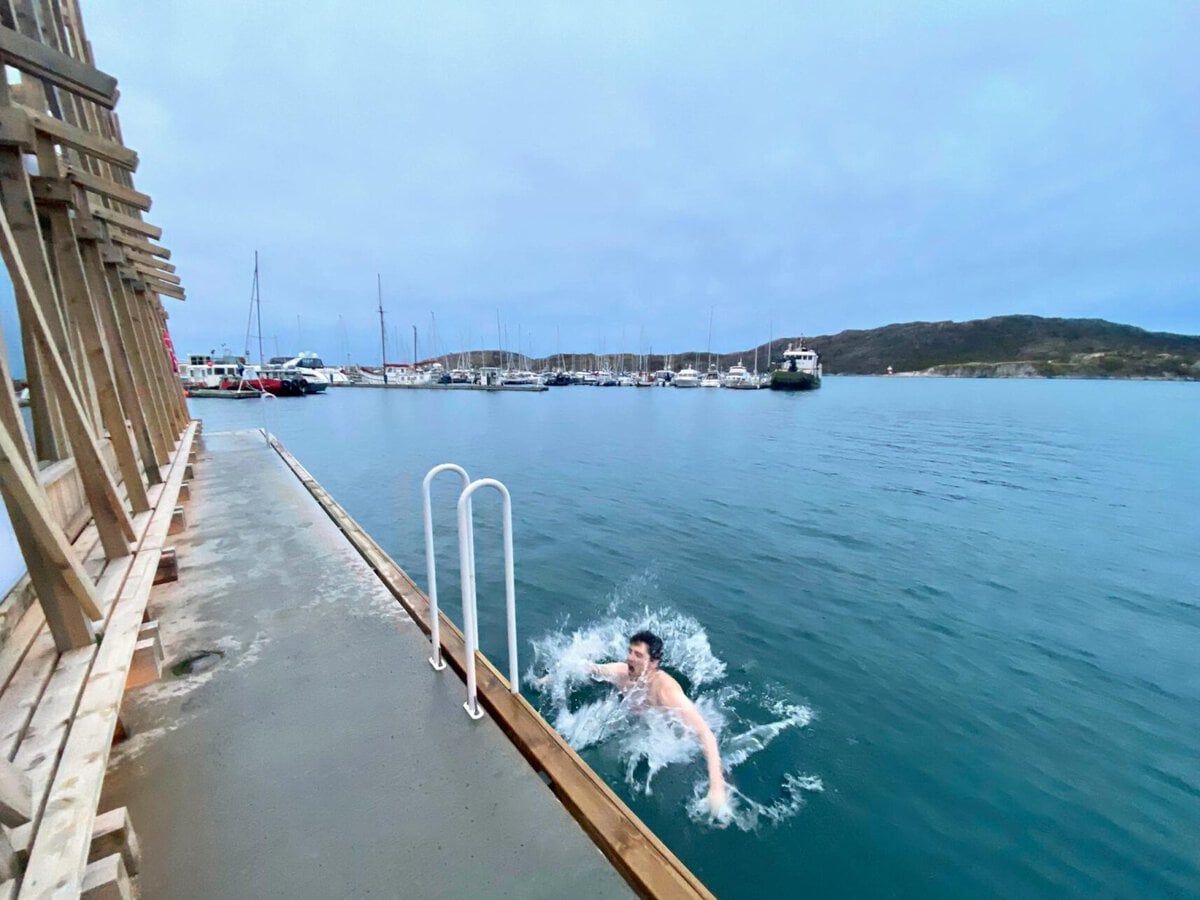
The Pust floating sauna in the harbor is an institution in Northern Norway (we also enjoyed it in Bodø): you heat up, you jump into the fjord, and you feel amazing. The botanical garden on the university campus is the world’s northernmost and is free to enter. Blåst is the world’s northernmost glassblowing studio, operating since 2002, with the work made on-site. The Polar Museum and Perspektivet Museum cover the city’s history as an Arctic hub from two different angles — exploration and culture, respectively.
For food: the harbor fish market for smoked salmon, Arctic char, and fish soup; Wi-To on Storgata for waffles and brunost (since 1921); and Raketten, the small yellow rocket-shaped kiosk that has been serving reindeer hot dogs since 1911 and is now a listed cultural heritage site. The seagulls are aggressive. Fight for your hot dog.
Kvaløya: the island just across the bridge
Cross the bridge next to the Tromsø airport, and you’re on Kvaløya. Most people use it as a northern lights spot in winter or a road to Sommarøy, Senja or beyond. We lingered, and it became one of the most extraordinary places we’ve been in Northern Norway.
The island is fabulous for hiking. Bromstinden near Rekvik climbs to 516 meters with panoramic fjord views and, on clear days, the peaks of Senja in the distance. Smørstabben above Grøtfjord beach is fairly easy and quiet. Nattmålsfjellet above Ersfjordbotn offers dreamy views over the fjord, with a lovely café in the village to get some energy back.
For northern lights: Ersfjordbotn is one of the strongest aurora spots near Tromsø, with mountains rising steeply on both sides and the fjord reflecting the lights on calm nights. Grøtfjord beach, with its white sand and unobstructed view, is another.
We woke up here to reindeer outside the window. Go slow, stay a night (or two, or a lifetime?), and keep driving when the road keeps going.
Related read: How to Get the Most Out of Your Northern Lights Tour
Senja: Norway’s Best-Kept Secret (For Now)
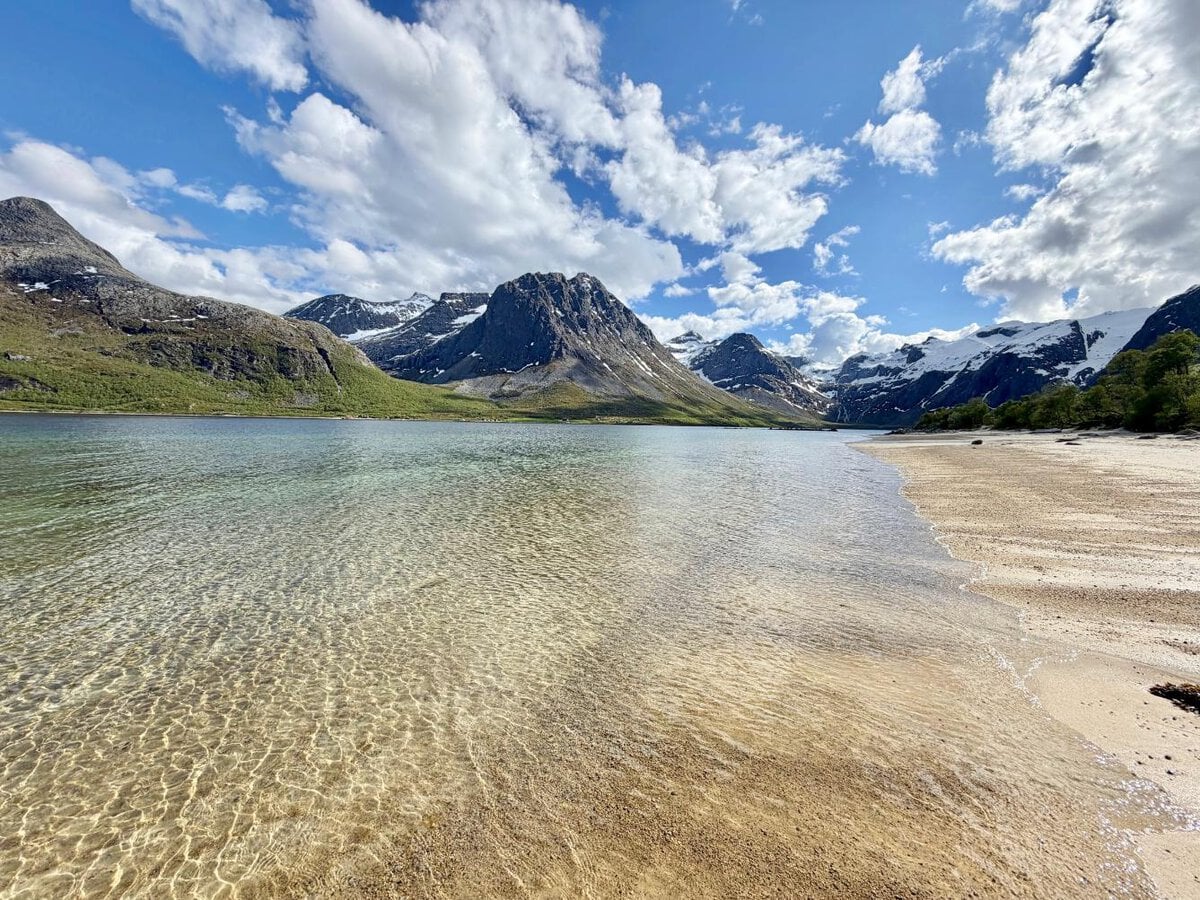
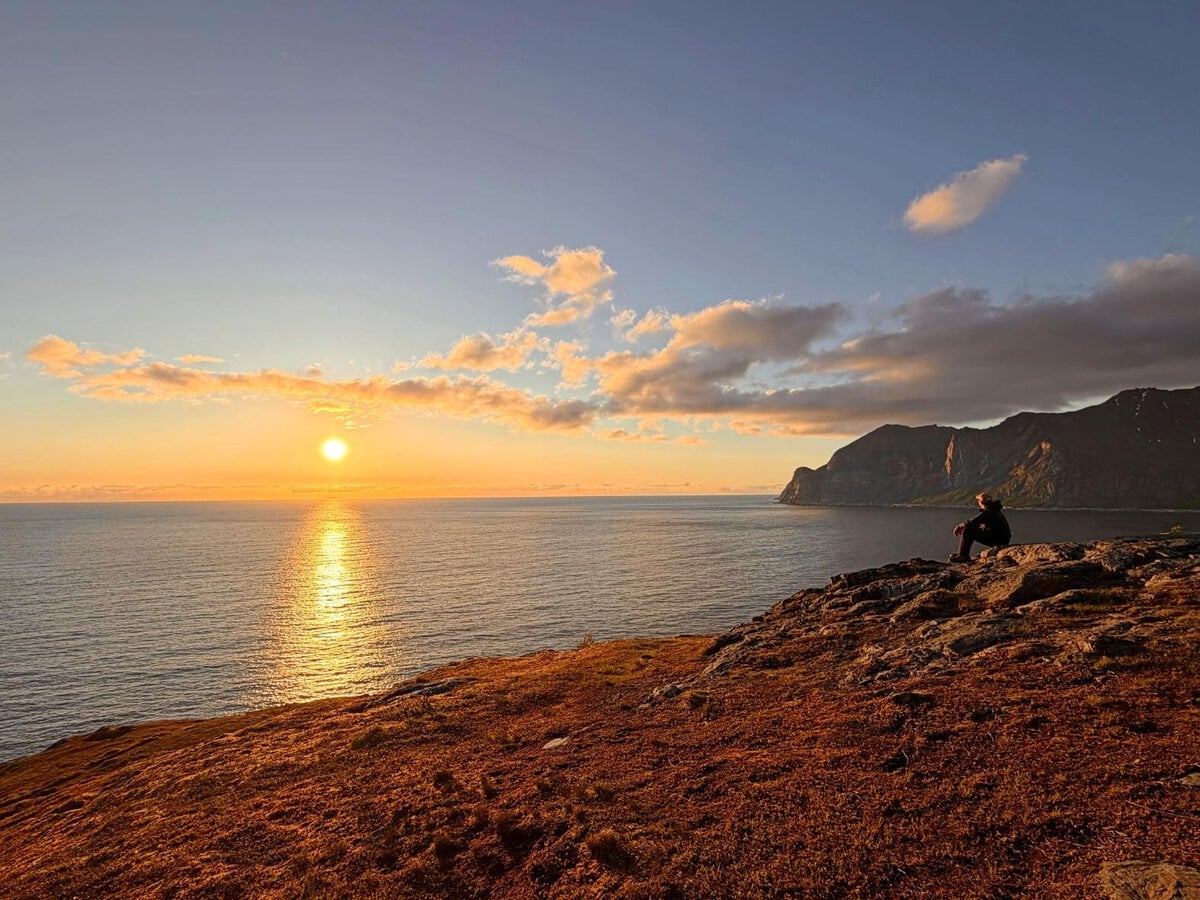
Senja is what happens when you take Lofoten’s geology, dial up the wilderness, and subtract most of the visitors. The peaks are sharper, the fjords are deeper, villages are sparse, and the contrast between the wild north coast and the calmer south is striking. Imagine turquoise water, white sand beaches, pine forests, and mountain ridges that look photoshopped.
It’s about two to three hours from Tromsø by car (via a ferry if you arrive from Sommarø), and it rewards people who go deeper than the main viewpoints along the road. This is an island where a guide makes a real difference. Kayaking, guided skiing & snowshoeing tours, midnight sun hiking – the sky is the limit (and sometimes it isn’t).
Husfjellet
Husfjellet is one of Senja’s most beloved hikes and, honestly, one of the most satisfying we’ve done in Norway. The views from the summit are insane, even by Norwegian standards: the sea in multiple directions and the jagged ridgeline of the island (including the iconic Okshornan peaks).
The approach from Skaland puts the trailhead essentially at the door of the adventure lodge there, which means you can roll out of bed, get your boots on, and go. Late May, we enjoyed a snowstorm at the top, but we just waited for it to pass, and the views magically appeared. That’s hiking in Northern Norway.
Hesten
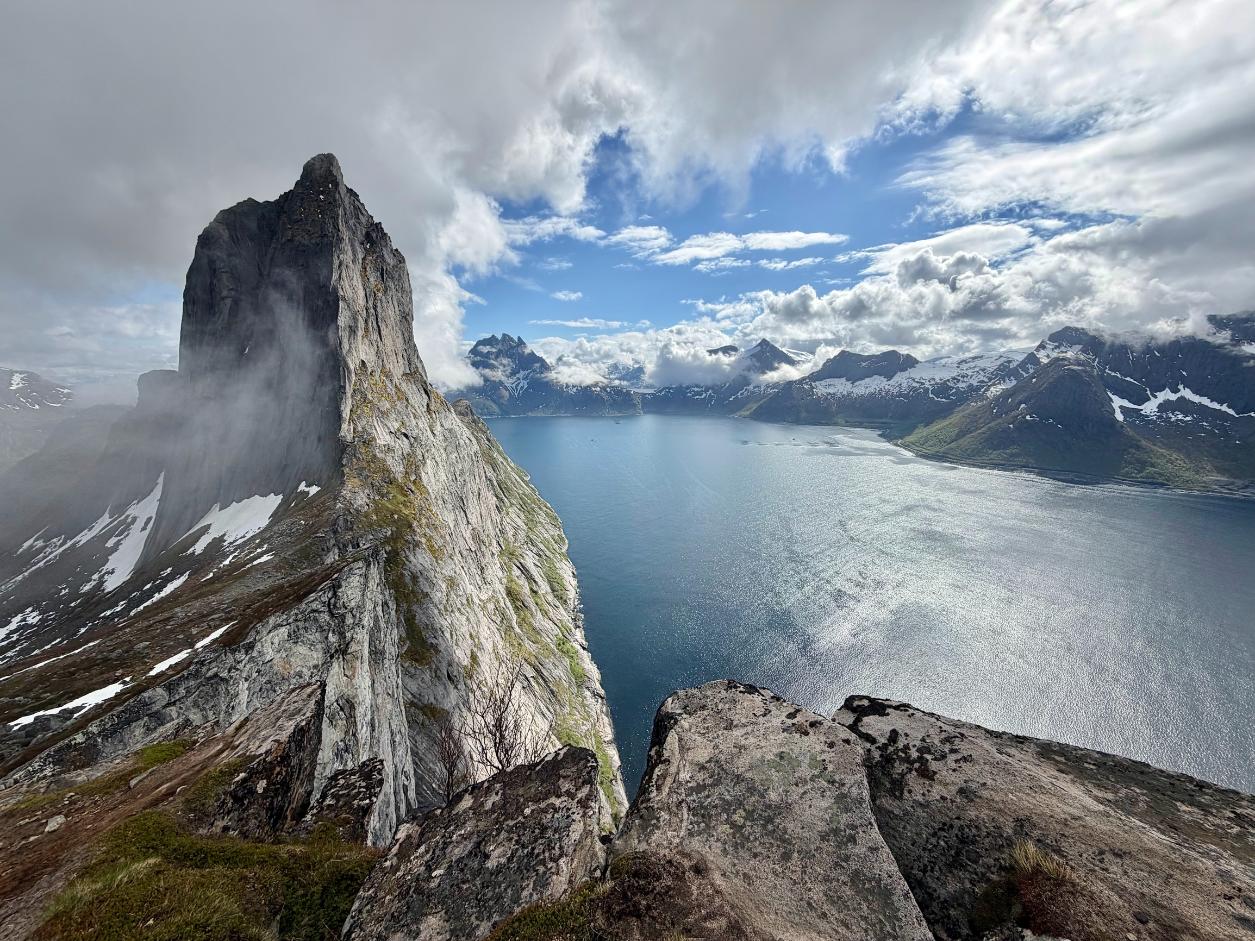
Hesten sits in the Fjordgård area on the eastern side of the island. Like Husfjellet, it has steep terrain and exposed sections near the top, but what you get at the summit is a view over Mefjorden and the surrounding peaks, and, most importantly, the iconic Segla mountain. We saw many ptarmigans, quietly posing in front of this crazy-looking peak. Even AI can’t do that.
Alta: Norway’s Underrated Arctic Hub
When we arrived in Alta with our friends, locals kept asking us: “Why Alta?” That question is both an honest reflection of how little international attention the place gets and a mildly offensive underestimation of what it has to offer.
With a population over 10,000, Alta sits in Finnmark on a fjord with open skies, very little light pollution just outside town, and an aurora season that runs from late September to early April. The northern lights met us at the airport on arrival and came back twice during the trip. We’ve rarely had it that easy.
Hiking to Haldde Observatory
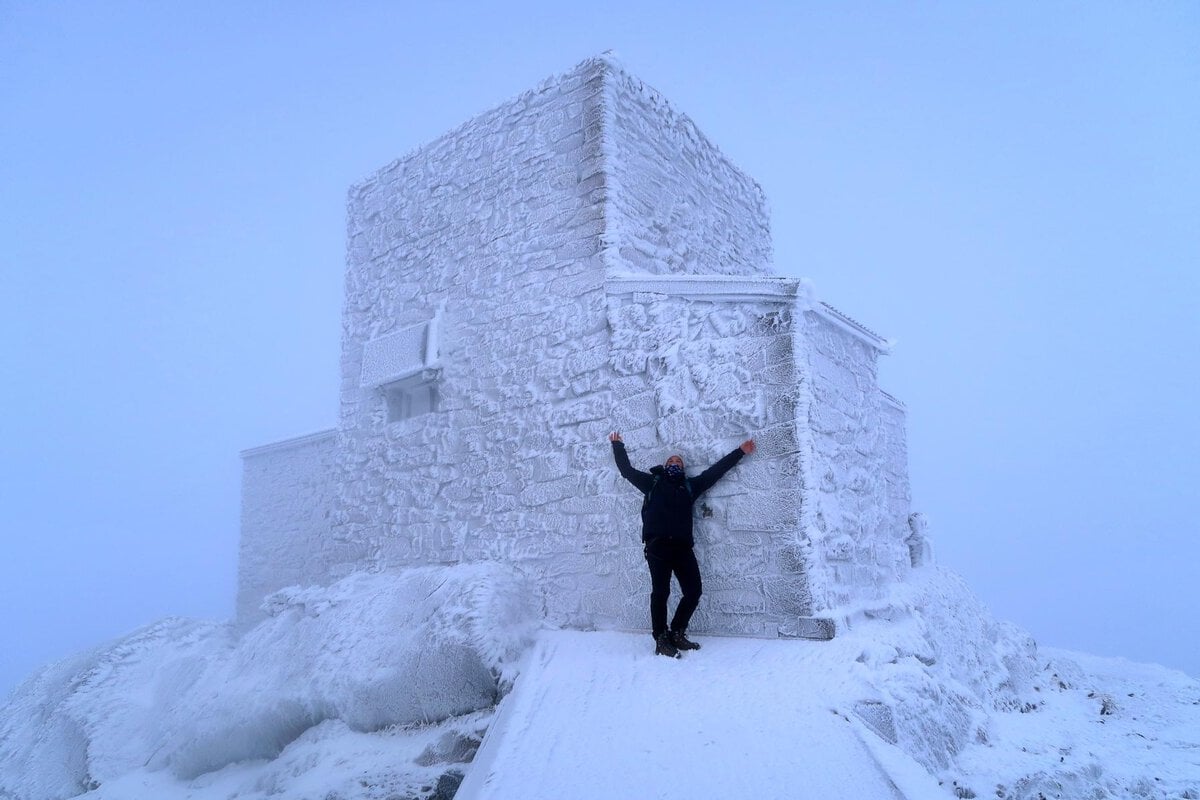
The first permanent northern lights observatory in the world was built on Mt. Haldde in 1899 by the physicist Kristian Birkeland. Getting there involves roughly 18 kilometers round trip with around 1,000 meters of elevation gain, which, in the Arctic, feels like high altitude.
We took a cab to the trailhead at 5am in October, with no snow at the bottom, and arrived at the summit in freezing fog, completely alone, as the ruins of the old research station emerged. The aurora science developed here changed how humans understand the polar sky, which makes the place even more special.
Sautso Canyon
Norway’s “Grand Canyon” has almost no signage and almost no visitors, which in this case is either a planning failure or a gift. We nearly missed the trail sign entirely in fresh October snow.
Dog sledding and dog carting
Alta’s long, calm forest routes make for excellent dog sledding in winter, with that particular blue-hour light through the trees that makes you feel like you’ve wandered into a fairy tale. In fall, before the snow comes, many kennels switch to dog carting on wheels. Same dogs, same energy, considerably bumpier and muddier. We tried it with Holmen Husky Lodge and had a blast, especially when they let us into the puppy enclosure.
King crab on the fjord
The king crab boats go out from the fjord, pull traps from below, and then cook the catch right on the water. It is an outdoor activity that ends with the best meal of your trip.
Sámi culture and reindeer
Alta is one of the best places in Norway for Sámi experiences that still feel personal rather than staged. Several Sámi families open their reindeer enclosures to visitors, share traditions, offer joik singing, and serve warm food inside a lávvu. In spring, late April to June, the calving season adds something rare: newborn reindeer in the tundra, witnessed in small groups at the herders’ camps.
Alta Museum and the UNESCO rock carvings
Northern Europe’s largest collection of prehistoric rock art sits at the edge of the Altafjord: hunting scenes, rituals, and wildlife carved into the stones by ancient hunter-gatherers between approximately 7,000 and 2,000 years ago. UNESCO added it in 1985.
The Far North: Hammerfest, Honningsvåg, Kirkenes
We’ll be upfront: we haven’t spent extended time in these three towns, so we’ll flag what they’re known for without pretending otherwise.
Hammerfest is one of Norway’s northernmost towns and has rebuilt itself twice, once after a fire in 1890 and again after German forces burned the entire Finnmark region during their 1944 retreat. That history is embedded in the town in a way that makes it worth more than a quick stop. The Meridian Column here is a UNESCO World Heritage Site, marking one of the first precise measurements of the Earth’s shape in the 19th century.
Honningsvåg is the gateway to the North Cape (Nordkapp), the northernmost point on mainland Norway accessible by road. The globe monument at the cliff’s edge has appeared in enough photographs to function as its own landmark. That being said, we think it’s a bit overrated and packed in summer.
Kirkenes, near the Russian border, has built a strong reputation on king crab safaris. The Barents Sea red king crab population has expanded significantly over recent decades, and tours here involve heading out by boat or snowmobile in winter to pull traps from below the ice, then cooking on the spot.
Svalbard: Next-Level Arctic
Everything north of Alta is deep Arctic. Svalbard is what comes after extreme. The archipelago sits halfway between mainland Norway and the North Pole. We thought we knew the Arctic. Well, we didn’t until we went to Svalbard.
Longyearbyen: a town at the edge of the world
The main settlement, Longyearbyen, has about 2,400 inhabitants from 53 countries. It has restaurants, a university, a hospital, a shopping center, a surprisingly large grocery store, free-roaming reindeer on the main street, and a cemetery that stopped accepting new residents about a century ago. The permafrost prevents proper decomposition, so if you become seriously ill in Svalbard, you’re flown to the mainland. Death has been, in a practical sense, banned.
Longyearbyen has good things to see on its own: the Svalbard Museum covers the archipelago’s remarkable history of whaling, coal mining, and scientific research; the Svalbard Global Seed Vault, built inside a mountain to store plant seeds against catastrophe, is visible on a guided snowshoe trip nearby (you can’t go inside, but the entrance alone is an eerie and worthwhile object); and the town’s pub culture, particularly over a local Arctic ale, is where you’ll hear stories that don’t happen anywhere else on earth.
Getting out into the wilderness
Outside Longyearbyen, you legally need an armed guide or a weapon (if you have a permit, obviously) to move around. Polar bears are a genuine risk, and the signs marking the polar bear zone limits are not decorative. The right response is not fear but respect, and the organized expedition culture on Svalbard reflects that.
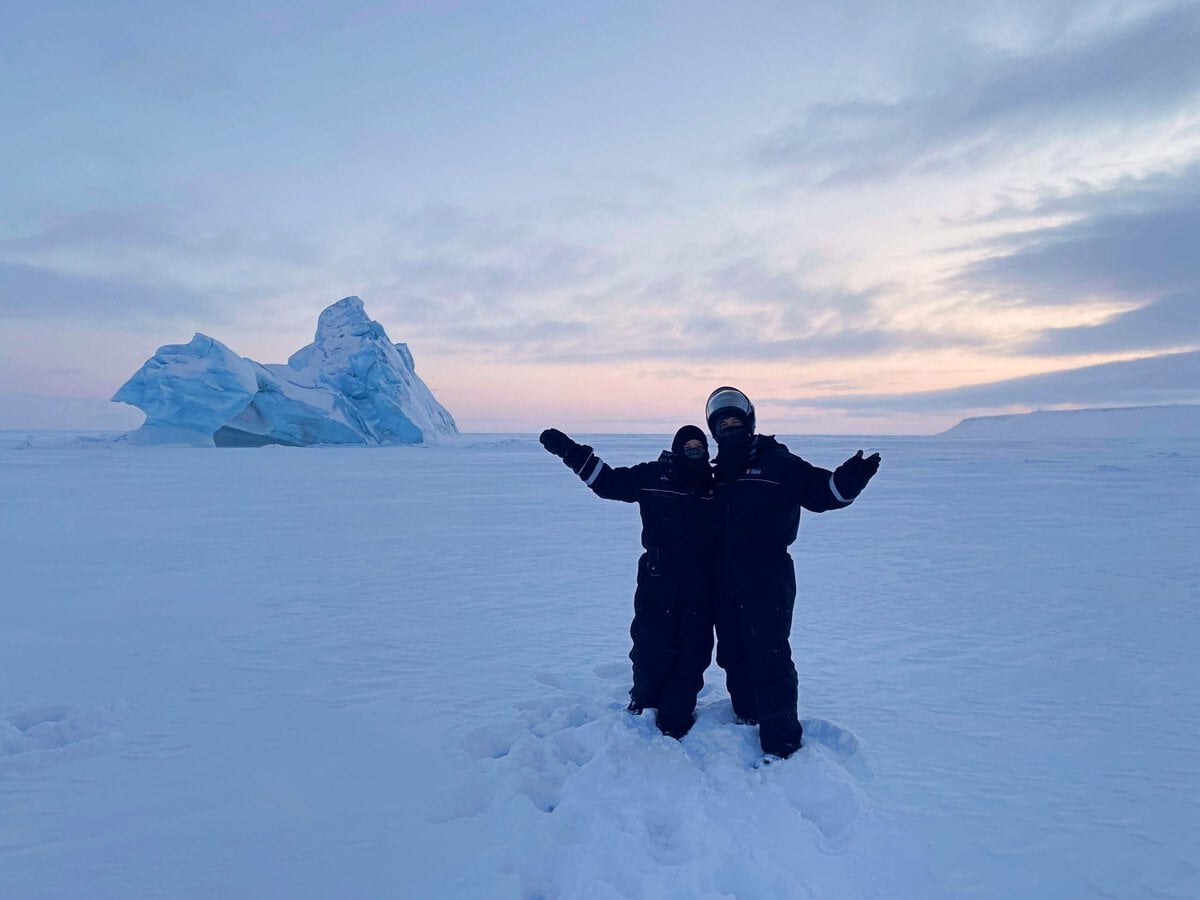
The activities are real expeditions: multi-hour snowmobile trips across glaciers with ice-thickness checks before each crossing, dog sledding through the polar night, and ice cave visits on nine-hour days that leave you exhausted. We took a snowmobile to the East Coast in February, a ten-hour round trip with several snowstorms, thin ice on glaciers, and nowhere to warm up. Lunch was a dehydrated meal eaten in two minutes without removing our gloves.
Every second of discomfort was worth it. The East Coast is less influenced by the Gulf Stream than the west, meaning lower temperatures and expansive ice formations and, if you’re very lucky, a polar bear sighting from a safe distance.
When to go
Each season is a completely different version of the place. Summer brings the midnight sun and wildlife: seabirds, walruses, reindeer, seals, and boat cruises with real chances of polar bear sightings. Autumn starts the aurora season and transitions into winter activities.
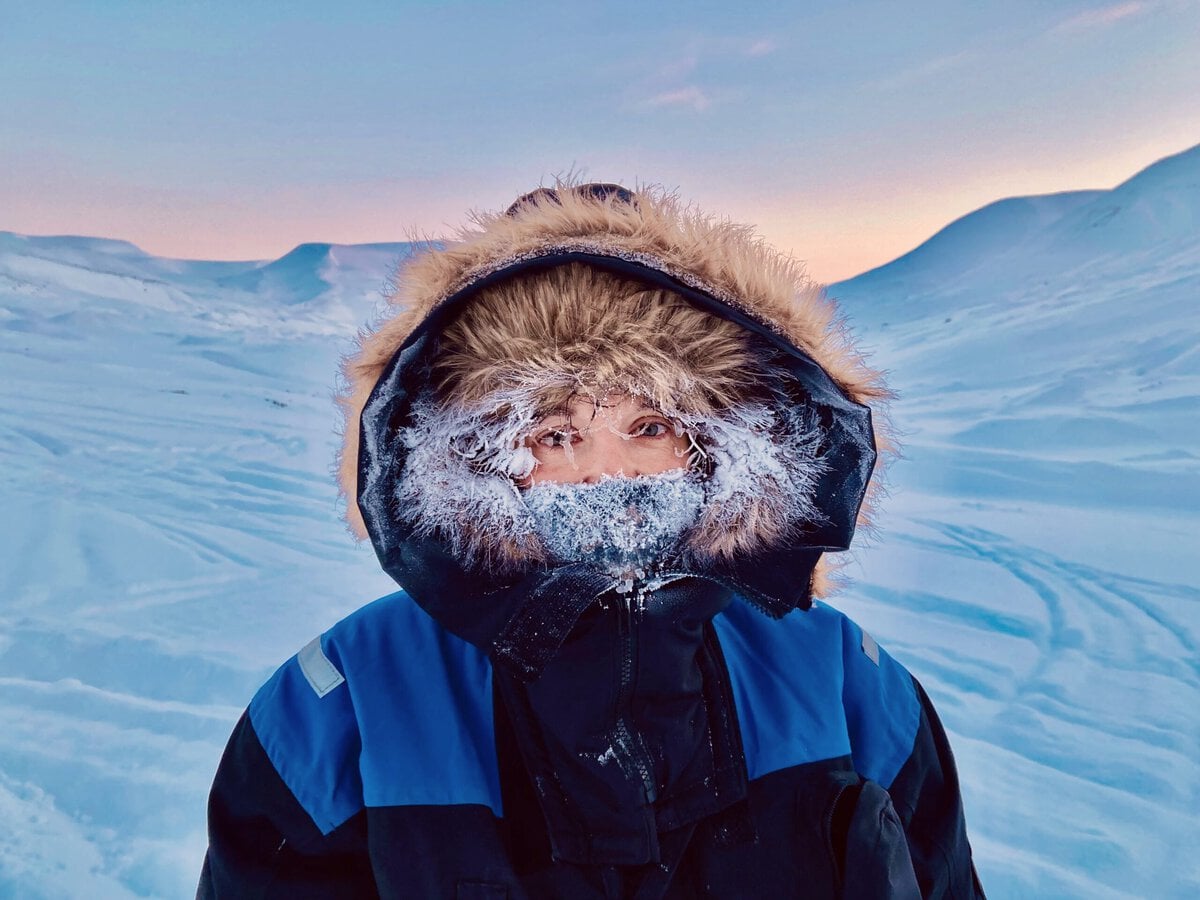
Winter, the polar night from late November to late January, is that surreal blue-and-purple world that we always struggle to properly describe to people who haven’t been to the Arctic, with freezing temperatures (+ the windchill) that can drop below -40 ºC. Spring brings the return of light and the first wildlife of the season.
Practical reality
Svalbard is not an add-on to a Northern Norway trip. It requires its own flight from Oslo or Tromsø, its own budget, and its own preparation. Book excursions well in advance; space is limited, and groups fill months ahead. Travel insurance that covers snowmobile accidents, ice, and remote terrain is not optional. We know this from personal experience.
The Northern Lights: Honest Expectations
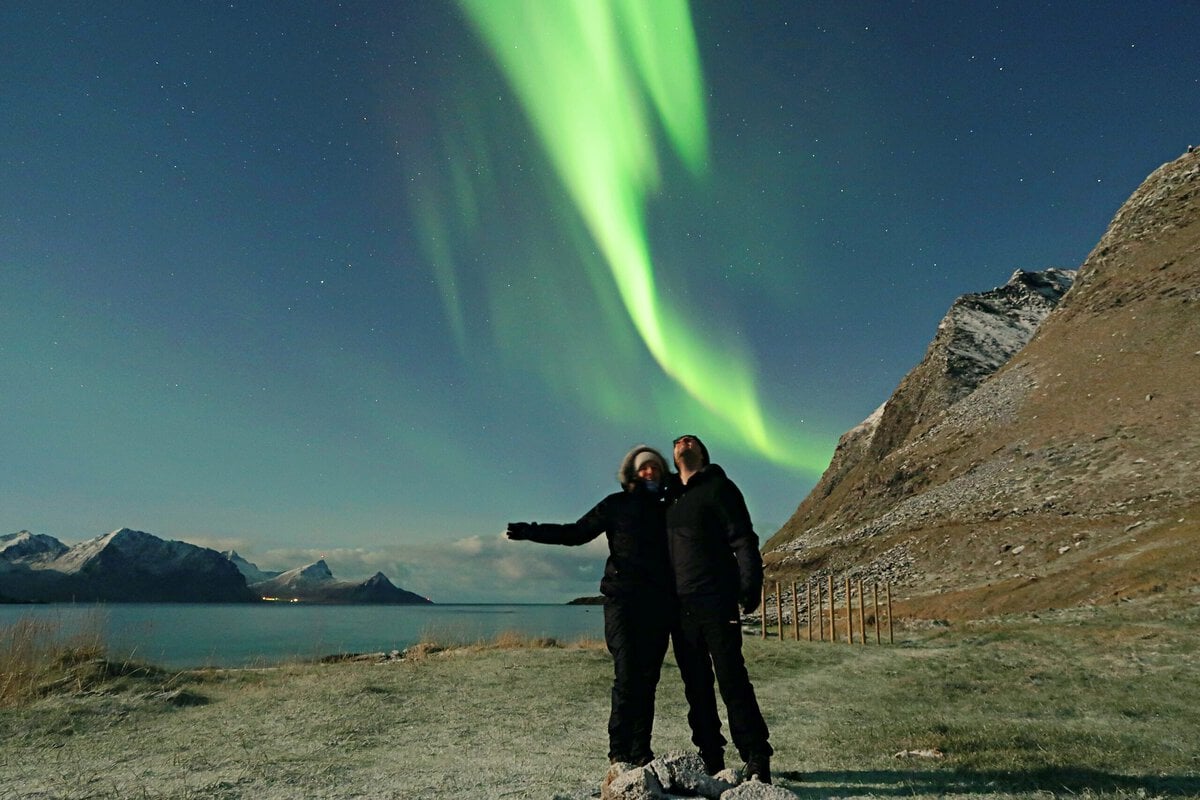
Every destination in this guide is above the Arctic Circle or close to it. The northern lights are a possibility across all of them from late August through early April. Alta is consistently among the best places on earth for aurora viewing. Tromsø has a full industry around it. Lofoten’s combination of dark winter skies and dramatic mountain backdrops makes it one of the most photographed aurora locations in the Nordic countries.
A few things worth saying: cloud cover is usually more of an obstacle than solar activity; the forecast apps the guides (and we) actually use are the Space Weather app and the Norwegian Meteorological Institute’s aurora forecast; and the best aurora experiences happen outside the car or your accommodation, in the cold, looking up. Dress for the cold. Then dress warmer than that. The lights are a natural phenomenon, and that’s what’s magical about it: no app will reliably tell you when Lady Aurora decides to put on a show.
We have a special Northern Lights Hub on Penguin Trampoline with destination guides, photography guidelines, apps, the science behind it, and the best tips we have gathered in two decades of aurora chasing across the world.
How to Plan a Northern Norway Trip
The distances are longer than they look on a map and include ferry crossings. Alta to Bodø is roughly 700 kilometers by road. Svalbard requires its own flight. The most practical approach for most people is to fly into Tromsø or Bodø, rent a car, and build from there: ferry to Lofoten from Bodø, work north or south from Tromsø depending on your time. Senja is a two- or three-hour drive from Tromsø plus a ferry option. Alta is roughly five hours northeast.
As everywhere in our beloved Arctic, winter and summer are completely different experiences. Winter gives you the northern lights, snowshoeing, ice climbing, skiing, dog sledding, whale watching, the polar night atmosphere, and significantly fewer people (with the exception of Tromsø, which is all about the aurora). Summer gives you the midnight sun, kayaking in dreamy fjords, easier road trips, and open hiking season in the mountains.
Spring and fall are the transitions nobody talks about enough: frozen fjords one week, wildflowers appearing the next, the first snowfall, days getting half an hour longer or shorter, and the season changing in fast-forward in front of you. Everything is usually much cheaper and much calmer.
For any activity involving ice, snowmobiles, remote terrain, or Arctic weather, travel insurance that covers adventure sports is not optional. Many standard policies exclude them. Check before you go.
Frequently Asked Questions
When is the best time to see the northern lights in Northern Norway?
Late August through early April, with Alta and Tromsø offering the most reliable viewing due to low light pollution and established aurora infrastructure. Clear, cold nights away from town give the best results — cloud cover is the main obstacle, not weak solar activity.
Is hiking in Northern Norway suitable for beginners?
Some routes are, but many popular hikes like Reinebringen and Husfjellet involve steep, sustained climbing that Norway’s own trail grading system rates as demanding. First-timers should stick to blue-graded trails and budget more time than the signposted estimate suggests, especially in wet conditions.
Do I need a car to visit Northern Norway?
A rental car makes the most sense for reaching Senja, Kvaløya, and Alta’s outlying sights, though Lofoten is reachable by ferry from Bodø and Tromsø has enough within walking or bus distance for a shorter stay. Distances are longer than they look on a map, and ferry schedules need to be built into the route.
Is Svalbard safe to visit without experience in Arctic travel?
Yes, but only through organized tours — independent travel outside Longyearbyen requires an armed guide due to polar bear risk, and it’s not legally optional. Travel insurance covering snowmobile accidents and remote terrain is essential, as standard policies often exclude it.
What’s the difference between visiting Northern Norway in winter versus summer?
Winter brings the northern lights, dog sledding, and snowmobiling but far less daylight and extreme cold, especially in Svalbard. Summer brings the midnight sun, hiking season, and kayaking, with easier logistics but bigger crowds in Lofoten specifically.
How many days do you need to see Northern Norway properly?
Two to three weeks lets you cover the mainland highlights (Bodø, Lofoten, Tromsø, Senja, Alta) without rushing; Svalbard requires its own separate trip with its own flight and budget rather than being tacked onto a mainland itinerary.