Canada’s top court is stepping into a case that could reshape how online gambling works across the country, with provinces, regulators and global operators all lining up to weigh in. New filings and the court’s own docket show Loto-Québec is now formally part of the appeal, joining other provincial lottery bodies pushing back against Ontario’s plan to open its system beyond national borders.
The case surrounds the proposed model that would let people in Ontario play and place bets with users outside Canada. Filed under Supreme Court docket number 42141, Ontario asked the courts in 2024 to rule on whether its idea would be legal before fully rolling it out.
This makes this a constitutional reference, where judges are asked to assess a hypothetical framework rather than rule on past conduct. As one submission puts it, the reference “necessarily posed a hypothetical question… and the hypothetical facts must be accepted” .
Who is fighting in Ontario gambling case and why it matters
What started as a legal question from Ontario has quickly turned into a national battle. Provincial lottery corporations from across the country are now opposing Ontario’s position, including the Atlantic Lottery Corporation, the British Columbia Lottery Corporation, Manitoba Liquor and Lotteries Corporation and Loto-Québec, all listed as active appellants in the Supreme Court case.
Ontario’s side is led by its attorney general, backed by a mix of industry and Indigenous interveners. The Canadian Gaming Association, Flutter Entertainment plc and NSUS Group Inc. and NSUS Limited are all participating, along with the Mohawk Council of Kahnawà:ke. Alberta’s attorney general is also seeking to intervene, with that request still pending before the court.
This question was posed because, by enabling interaction with international players, Ontario’s proposed scheme will expand the available funds in games (also referred to as “liquidity”), generate greater interest in the games offered in Ontario’s regulated market, and increase revenue for the province.
The court is being asked whether Ontario can allow its residents to take part in online games and betting pools that include players outside Canada, while still complying with the Criminal Code.
In 2025, a majority of the Ontario Court of Appeal ruled that the model would be lawful, finding that the province could still meet its obligations under federal law even if players abroad were involved. The Supreme Court will now take the final word.
How Ontario’s proposed model would work
Ontario’s plan is built around the idea that bigger player pools make online gambling more viable. In games like poker, where players compete against each other, having more participants means more tables, larger prize pools and more consistent activity.
Court filings state that by connecting with international players, Ontario would expand what the industry calls “liquidity,” increasing both participation and available betting funds. According to submissions, that could “generate greater interest in the games offered in Ontario’s regulated market, and increase revenue for the province.”
Under the proposed system, Ontario would still control what happens inside its borders. The province would set the rules, enforce standards and oversee operators serving Ontario players. Participants outside Canada would join through platforms regulated in their own jurisdictions.
Supporters say that setup keeps the system legally grounded in Ontario. In their view, the province remains the “operating mind” of gaming activity within its territory, even if it connects to other systems abroad. Rather than one global gambling network, they describe a structure where separate systems interact but remain locally governed.
If Ontario is only running its own portion of the system, supporters argue, it could still “conduct and manage” gaming within the province as required under federal law.
Opponents see it very differently
Provincial lottery corporations pushing back against Ontario say the proposal crosses a clear legal line. Their argument leans on how Canadian gambling law is structured as most forms of organized betting are illegal unless they fall within specific exemptions granted to provinces.
As one submission puts it, such activity is “presumptively unlawful unless a specific statutory exemption applies,” and those exemptions, they argue, are tied to geography. In their reading, once betting involves players outside Canada, it moves beyond what provinces are allowed to regulate.
They also point to the history of Canadian gambling law. Parliament has long treated foreign lotteries with caution, partly because of the difficulty of controlling operators beyond national borders. Court materials highlight concerns that there may be “no way of controlling the operation of a foreign lottery” or enforcing its conditions.
From that perspective, Ontario’s proposal risks weakening safeguards built into the Criminal Code. Opponents argue that even if the province maintains control over its own system, linking it to international platforms creates practical and legal complications that the law was designed to avoid.
There are also disagreements about how the system would function in practice. While Ontario’s model assumes players in other Canadian provinces would be excluded, critics question how that would be enforced. Supporters counter that tools like geolocation and contractual agreements already allow operators to restrict access by location and could be extended to this model.
Ontario cross border gambling ruling that could reshape the market
Beyond the legal arguments, the case reflects a larger tension between traditional regulation and digital markets that don’t stop at borders. Online gambling has expanded exponentially in recent years, and provinces are trying to balance control, revenue and competition with offshore platforms.
For Ontario, larger player pools could make its regulated market more attractive and potentially increase returns from an industry that already generates significant public revenue. For other provinces, the concern is that opening the door to international participation could disrupt existing systems and shift how gambling is delivered across Canada. At issue is whether laws built around physical boundaries can stretch to cover systems where participation is inherently cross-border.
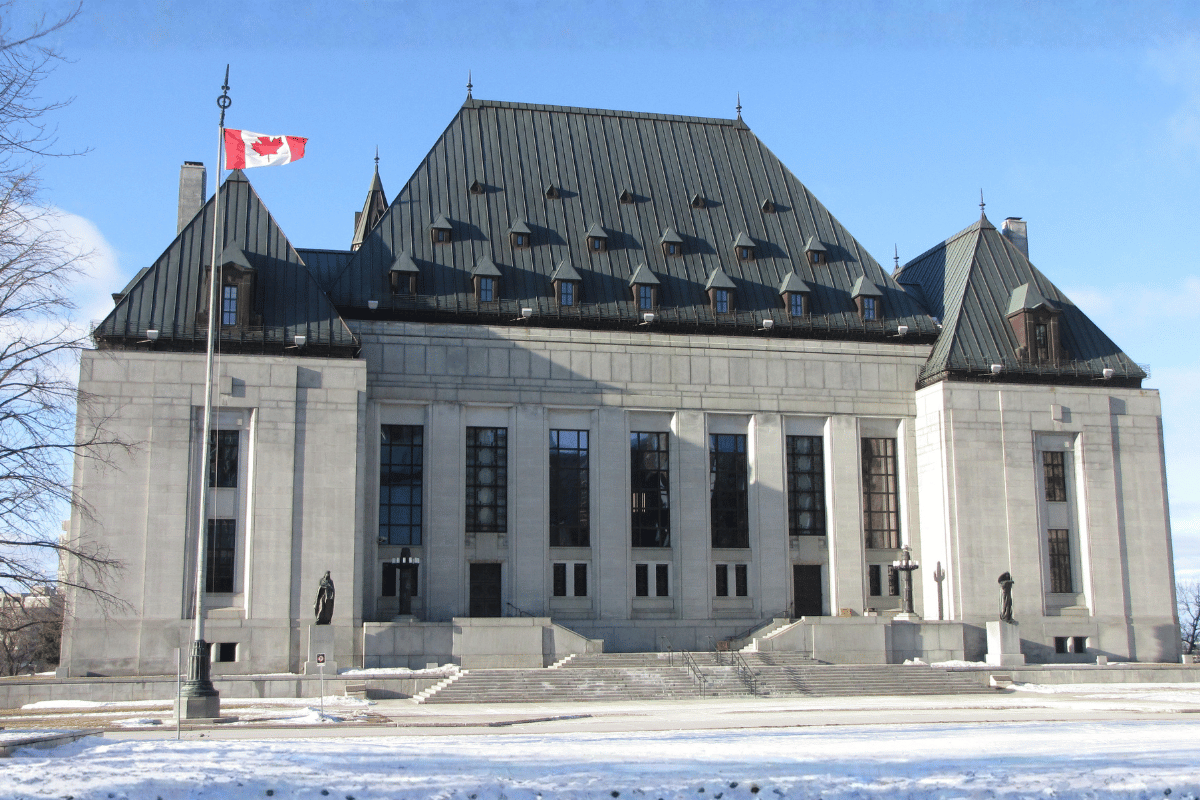
Featured image: D. Gordon E. Robertson via WikiCommons / CC BY-SA 3.0