OPINION: The UK government has finally opened the doors to plug-in solar panels in the UK, saying that they’ll be available in shops ‘within months’. Self-installed, and just requiring a simple 13A plug socket, will plug-in solar start a revolution and will the savings stack up?
As of April 1, the price cap has come down, and electricity and gas bills have just got a bit cheaper. Well, until you look at what’s going on in the Middle East and know that this reduction in price is a false dawn, and, unless things change dramatically, energy prices could soar upwards.
No wonder, then, that the demand for solar power has risen dramatically. As I learned from my BOXT Solar review, solar panels are well worth it in the UK, provided you have the right conditions: the right type of roof, facing the right way, and you’re planning to stay in the home that you own for long enough to see the benefits.
That leaves an awful lot of people who aren’t in the optimal situation, including those in flats, those who rent and those who are only going to stay in a place temporarily. It’s for these kinds of people that plug-in solar offers a lifeline.
What is plug-in solar?
With a fixed solar installation, the idea is to fit as many solar panels as possible onto your roof to generate as much electricity as possible. To use this DC current, you need a high-power solar inverter, which converts the incoming power into the AC power you use around your home. All this specialised equipment costs a fair amount, and then there’s professional installation on top of that.
Plug-in solar aims to make life easier, with self-install solar panels that you can hang over a balcony, put on a shed roof or even place in a small terrace or other outdoor space.
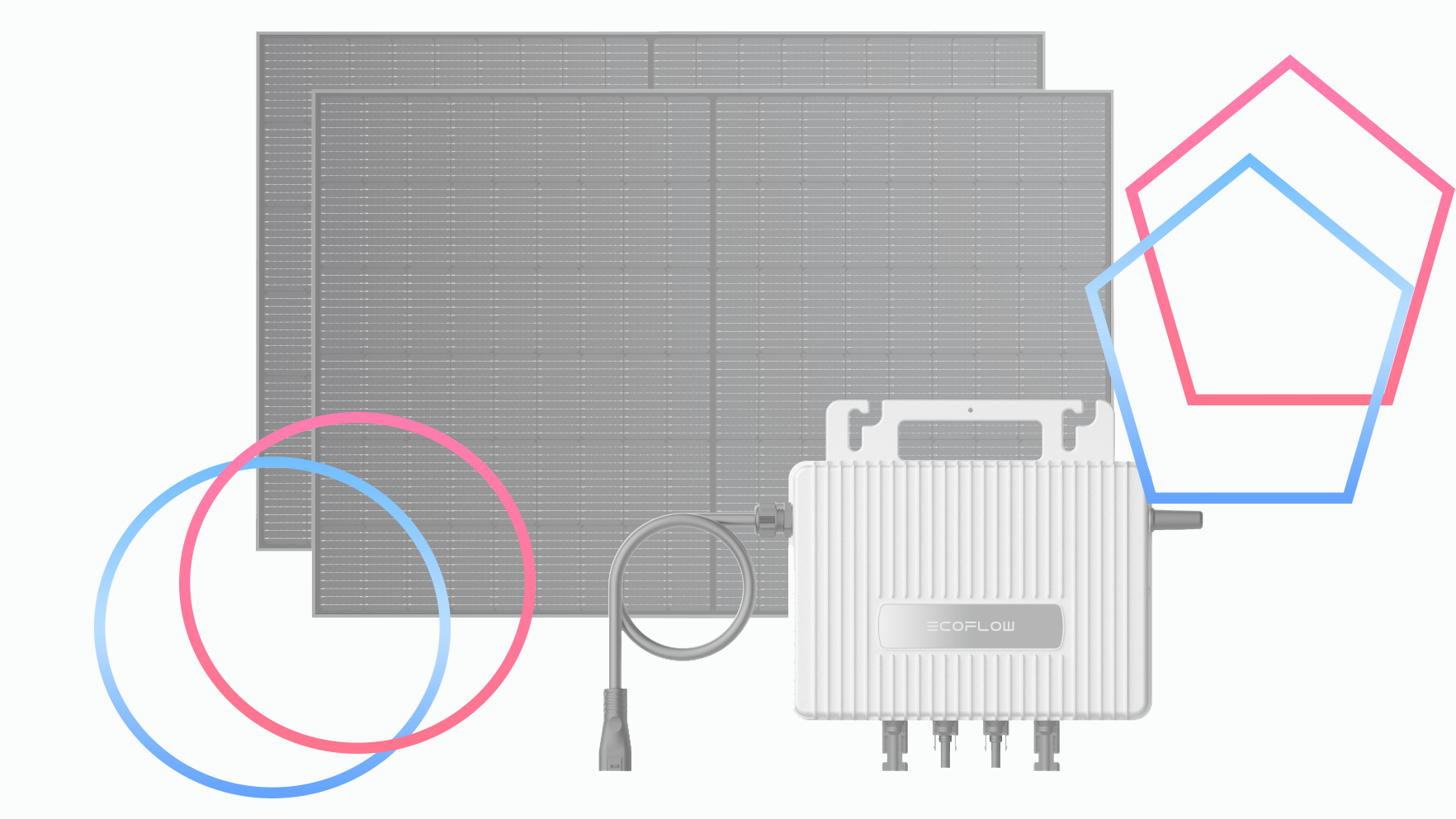
These then connect to a microinverter, which plugs into a standard three-pin socket, with no additional installation required. Under the new government legislation, systems that generate up to 800W can be plugged in without needing an electrician.
How much will plug-in solar cost?
The size of the system you buy and the types of fixing the solar panels buy all make a difference to the price. As you can’t buy many such systems yet, there’s not much to go on, but we do have some initial reports on the types of systems that will be available, and there’s European pricing, as plug-in solar is already available in a lot of other countries.
Initial reports suggest that plug-in solar systems will cost around the £400 mark, but smaller systems could be available at around £200, with the largest system with a battery maxing out at over £ 1000.
How much will plug-in solar save, and will it be worth buying?
Savings depend on the size of system you have and other factors. Most importantly, you still need to have an area suitable for solar panels: south-facing is ideal, with as much sun exposure as possible throughout the day. Essentially, you need direct sunlight; if you have a north-facing balcony, for example, or there’s a lot of shade where you want to put your plug-in system, you won’t generate a lot of power.
With those kinds of variables, typical energy savings could be from £70 a year, although EcoFlow says that you can save up to £115 per year with its STREAM Microinverter. This system is currently offered as a package with two 450W solar panels and a STREAM AC Pro battery (1.92kWh capacity) for £1049, marking a nine-year payback period (note that the current package requires an electrician to install, due to current legislation).
As we get more packages and I’m able to run some reviews, it will be possible to get a better idea of what these kinds of systems can do. The short version is that plug-in solar can’t generate the same kinds of power as rooftop panels, but you’ll still generate free power that will knock your electricity bills down.
It will be worth doing some sums to work out whether it’s worth buying a battery, too. As with a full rooftop solar, whether a battery is worth it will depend on how much power you generate and whether you can use it while it’s being generated or not. This is the kind of information I plan to cover in reviews once samples are available.
Provided you have the right place to mount panels, plug-in solar is a simple way to get started with free electricity generation, and with prices looking like they’re going up, any saving is good.