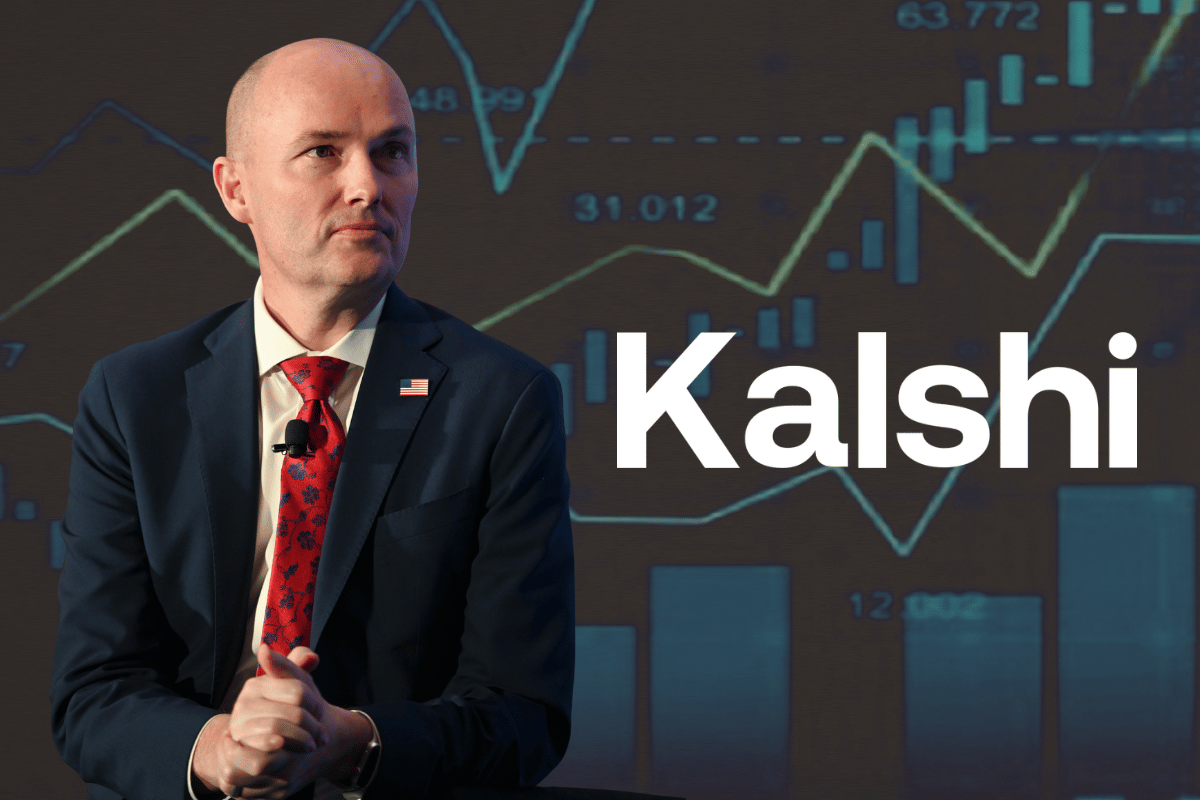
Kalshi has taken Utah’s top elected officials to federal court, accusing them of gearing up to block its prediction market business in the state.
In a lawsuit filed Monday (February 23) in the U.S. District Court in Utah, Kalshi says Gov. Spencer Cox and Attorney General Derek Brown are laying the groundwork to treat its event contracts as illegal gambling. The company is asking a judge to step in with declaratory and injunctive relief before any enforcement action begins, saying the threat alone is already hanging over its operations.
The dispute discusses who gets the final say over Kalshi’s business model. The company maintains that it operates under federal oversight and that any move by Utah to shut it down would run straight into the U.S. Constitution’s Supremacy Clause. Congress, Kalshi argues, handed the Commodity Futures Trading Commission (CFTC) exclusive authority to regulate derivatives trading on federally approved exchanges.
The complaint leans heavily on recent public comments from Cox. In a February news article, the governor said, “I think you’re going to see 50 states suing these guys in one way or another. It’s illegal in Utah and will continue to be so.”
According to the lawsuit, Cox also pushed back on social media after CFTC Chairman Mike Selig said the agency would defend its “exclusive jurisdiction over [] derivative markets.” Cox replied that he would use “every resource within [his] disposal as governor of the sovereign state of Utah” to challenge that stance.
Not long after, Cox circulated an article with the headline “Gov. Cox vows fight to keep prediction markets out of Utah,” adding his own remarks: “Rebranding betting as a financial product doesn’t reduce the harm it causes” and “We’re ready to defend our laws in court.”
Brown has also weighed in publicly. Kalshi points to an op-ed he published Sunday that mentioned the company by name and described how he intends to address prediction markets in Utah. The complaint further notes that Brown previously signed amicus briefs in federal appellate courts arguing that Kalshi’s sports event contracts amount to unlawful sports betting under state law, “absent preemption.”
Kalshi runs a derivatives exchange that the CFTC has designated as a contract market. On its platform, traders buy and sell event contracts tied to future outcomes, from economic indicators to sports results.
Under the Commodity Exchange Act, the CFTC holds “exclusive jurisdiction” over trading on federally regulated exchanges, the lawsuit says. When Congress created the agency in 1974, lawmakers were trying to avoid what one senator called “total chaos” caused by a patchwork of conflicting state rules.
The CFTC has recently told federal courts that, “due to federal preemption, event contracts never violate state law when they are traded on a DCM” like Kalshi.
Even if Utah officials believe some contracts look like gambling, Kalshi argues that federal law gives the CFTC alone the authority to decide whether event contracts involving “gaming” are “contrary to the public interest.”
After Cox’s February 17 social media post, Kalshi says it reached out to the Utah Attorney General’s Office seeking confirmation that no enforcement action was imminent. The company describes what had been a positive working relationship but says it received no response.
Without that assurance, Kalshi contends it now faces possible civil or even criminal penalties under Utah’s anti-gambling laws, including felony and misdemeanor charges. It plans to seek an emergency temporary restraining order and a preliminary injunction to prevent the state from taking action while the case moves forward.
Featured image: Maryland Gov Pics / Economic Club of Washington Fireside Chat via WikiCommons / CC BY 2.0 / Kalshi