Dutch gambling regulators say they are seeing a new type of integrity concern in sports betting, where athletes are placing wagers on competitions in which they are directly involved.
The warning appears in the Netherlands’ latest match-fixing monitoring report, where officials say several alerts during 2025 involved players betting within their own leagues or events. Regulators consider the practice a serious conflict of interest and a potential gateway to manipulation.
The findings come from the Kansspelautoriteit (KSA), the country’s national gambling regulator, which released its Trendanalyse Matchfixing 2025 examining suspicious betting activity reported by licensed operators.
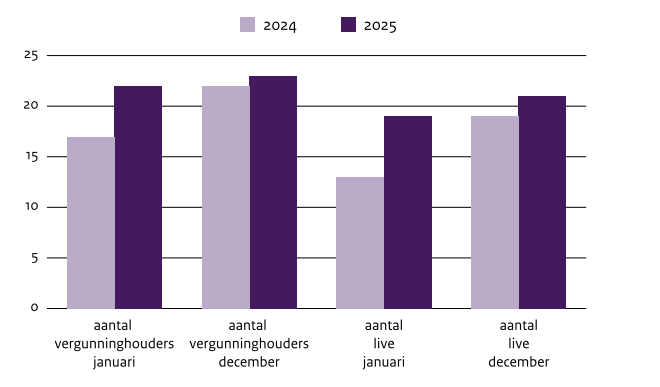
The number of alerts itself barely changed compared with the previous year. Operators submitted 12 reports in 2025, down only slightly from 13 in 2024. But regulators say the nature of those reports is changing, revealing warning signs that had not surfaced before.
Dutch regulator reports a new pattern in suspicious betting reports involving athletes
Within the twelve alerts filed last year, investigators identified four incidents involving professional athletes who placed wagers on competitions connected to their own sporting careers.
According to the KSA’s Sports Betting Intelligence Unit, this behavior did not appear in the previous reporting period, making it a notable development in the regulator’s annual monitoring.
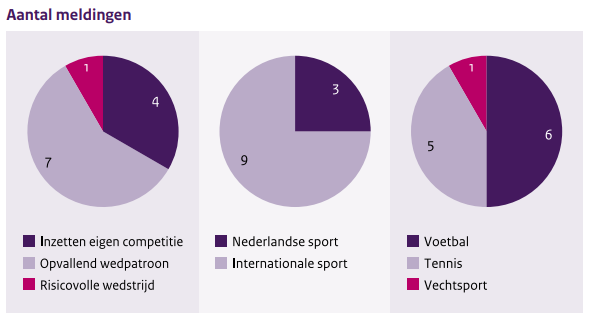
“The SBIU received four reports about players who placed a bet on their own competition,” the regulator said in the translated report. “More specifically, the reports concerned players who bet on their own match, their own competition or a competition in which they were professionally involved.”
Sports rules and betting regulations widely prohibit that kind of activity. When athletes bet on competitions tied to their professional roles, regulators say the risk extends beyond the wager itself. The situation raises the possibility that players could benefit from non-public information or influence events connected to the bet.
“The reason for this prohibition is that there may be a conflict of interest and/or the use of inside knowledge,” the report states.
In every case identified in the Netherlands last year, licensed operators stepped in quickly. Betting companies cancelled the wagers, closed or restricted the relevant accounts, and reported the incidents both to the regulator and to the appropriate sports federations.
Beyond those cases, most suspicious activity alerts still fell into the more familiar category of unusual betting patterns among customers.
Seven of the twelve reports involved behaviour the regulator describes as “striking betting patterns.” These can include bettors suddenly placing large wagers after a long period of inactivity, repeatedly betting heavily on a single event, or focusing unusually large sums on lower-profile competitions.
Such patterns do not automatically prove manipulation. However, analysts treat them as warning signals because they can point to bettors acting on privileged information about a match or athlete.
Football and tennis accounted for nearly all of the suspicious betting alerts recorded in the Dutch market during 2025. Six reports involved football matches, while five related to tennis events. One case concerned a combat sports contest.
How Dutch operators and regulators monitor betting markets
Under Dutch gambling law, licensed betting providers must actively watch for signals of manipulation or insider betting activity. When they detect something suspicious, companies must notify authorities without delay.
The reports are then sent to the regulator’s Sports Betting Intelligence Unit. The unit reviews betting data, assesses whether the activity could indicate match-fixing, and decides whether additional steps are needed.
The KSA itself does not run criminal investigations into match-fixing. Instead, its role centers on monitoring the betting market, ensuring that operators follow integrity rules, and passing relevant information to law enforcement or sports governing bodies when necessary.
Alongside monitoring activity, the regulator says it has increased its efforts to prevent integrity problems before they arise. In recent years the KSA has worked with sports organizations, athletes, and industry groups to raise awareness about betting restrictions and the risks tied to insider information.
As part of that effort, the authority published guidance in 2025 aimed at improving integrity procedures within the regulated market. The document, titled “Commitment to Integrity” (Inzet op Integriteit), outlines expectations for risk assessments, betting monitoring tools, and reporting obligations for licensed operators.
The regulator also took enforcement action during the year. According to a factsheet accompanying the report, authorities issued three warnings or formal notices related to betting integrity controls, along with one penalty order connected to regulatory compliance.
Growing global concerns around sports betting integrity
The issue of athletes betting on competitions linked to their own careers reflects global worries about the rapid expansion of sports gambling.
As regulated betting spreads across more jurisdictions and becomes more visible through sponsorships and media partnerships, integrity specialists say the potential for conflicts of interest is growing as well.
Several high-profile investigations internationally have highlighted vulnerabilities in professional sport. In one widely reported corruption case, five French tennis players received bans for match-fixing offences tied to lower-tier tournaments, where prize money is limited and oversight can be weaker.
Authorities in the United States have also explored the dangers posed by insider information. A federal investigation into leaked injury data involving NBA stars demonstrated how non-public team information could influence betting markets if it reaches gamblers before official announcements.
Integrity analysts warn that the sports betting ecosystem continues to evolve quickly. New wagering products, including prediction markets and alternative bet types, may introduce additional risks if regulators and sports bodies fail to keep monitoring systems up to date.
At the same time, the normalization of gambling partnerships across sports leagues has increased public discussion about how betting culture intersects with athletes’ professional environments.
Why low reporting numbers may not tell the whole story
Despite the new category of incidents pointed out in the Dutch report, the overall number of suspicious betting alerts in the Netherlands remains relatively small.
Regulators caution that the low total should not automatically be interpreted as proof that match manipulation is rare. Instead, it may reflect the limitations of monitoring activity within the legal market alone.
“The fact that the total number of reports remains low may be because most cases of gambling-related match-fixing occur with unlicensed gambling providers,” the regulator noted in its analysis.
Illegal betting platforms tend to operate outside regulatory oversight, making suspicious patterns harder for authorities to detect.
Featured image: Grok