Interest in prediction markets has surged in recent years, but two U.S. senators now want to make sure top government officials cannot profit from them.
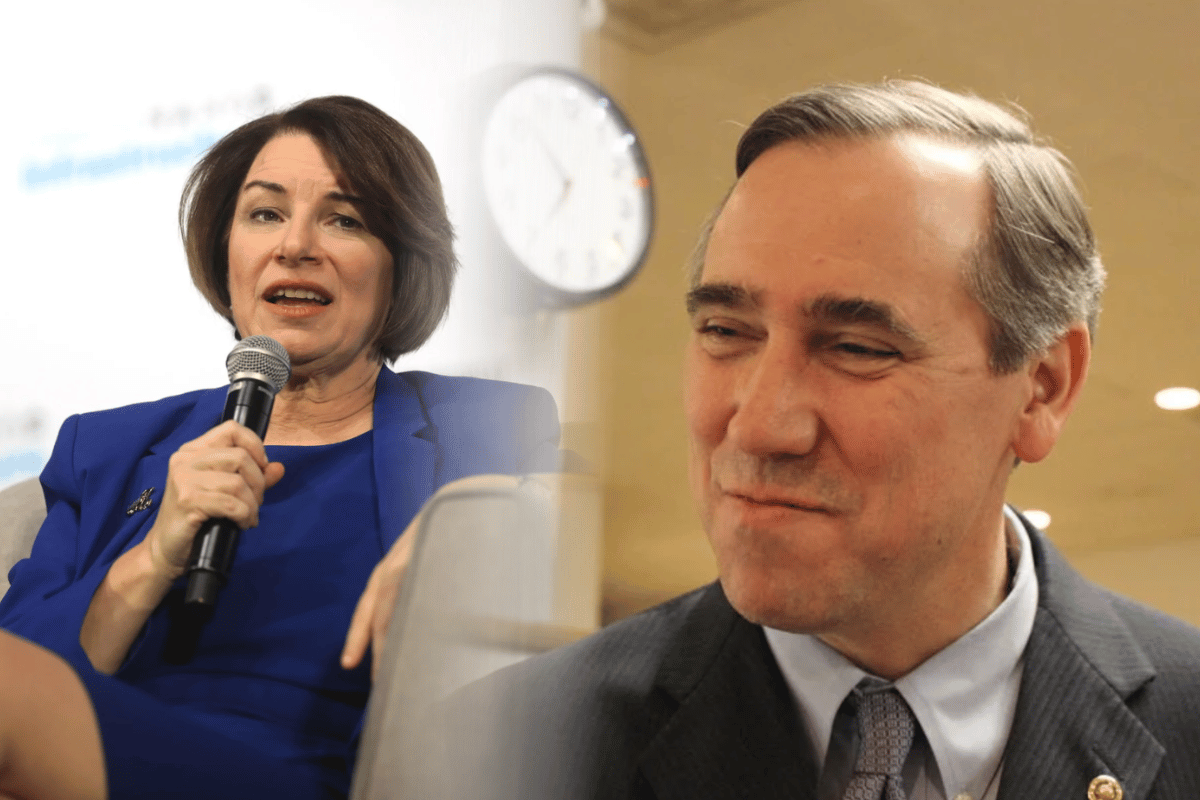
Senators Jeff Merkley of Oregon and Amy Klobuchar of Minnesota have introduced a bill designed to stop federal leaders from betting on prediction markets where people wager on the outcomes of future events. The proposal focuses on so-called event contracts, financial instruments whose value depends on whether a specific real-world development occurs.
The legislation, called the End Prediction Market Corruption Act, would modify the Commodity Exchange Act to prohibit the president, the vice president, and members of Congress from participating in those markets. The proposal arrives as prediction platforms such as Kalshi and Polymarket draw increasing attention in Washington, especially after controversial bets tied to geopolitical developments and political events.
Merkley says the measure is intended to protect public confidence in government and remove the possibility that officials might use privileged information to profit from sensitive decisions.
“When public officials use non-public information to win a bet, you have the perfect recipe to undermine the public’s belief that government officials are working for the public good, not for their own personal profits,” Merkley said in a press release. “Perfectly timed bets on prediction markets have the unmistakable stench of corruption. To protect the public interest, Congress must step up and pass my End Prediction Market Corruption Act to crack down on this bad bet for democracy.”
Klobuchar argues that the snowballing of the industry has created new opportunities for abuse and that regulators need clearer authority to police misconduct.
“At the same time that prediction markets have seen huge growth, we have seen increasing reports of misconduct,” Klobuchar said. “This legislation strengthens the Commodity Futures Trading Commission’s ability to go after bad actors and provides rules of the road to prevent those with confidential government or policy information from exploiting their access for financial gain.”
Several other Democratic senators have signed on as co-sponsors, including Chris Van Hollen of Maryland, Adam Schiff of California, and Kirsten Gillibrand of New York.
The bill lands at a moment when policymakers from both parties are increasingly uneasy about how prediction markets operate, especially when the contracts revolve around elections, global conflicts, or other politically sensitive developments.
What the proposed legislation would change
If enacted, the measure would impose a direct ban on certain federal officials participating in prediction markets. Under the bill, the president, vice president, and every member of Congress would be classified as “covered individuals,” meaning they could not buy or sell event contracts.
The restrictions would extend to senior officials within the executive branch who would also face limits, particularly when contracts relate to issues connected to their government responsibilities or policy decisions.
No senior executive branch official may purchase, sell, or otherwise exchange an event contract the subject of which is a matter in which the senior executive branch official participates personally and substantially as a government officer or employee.
Supporters say that safeguard is meant to prevent situations where insiders could benefit from confidential briefings or policy discussions that might influence real-world outcomes.
The legislation also spells out potential consequences for breaking the rules. The U.S. attorney general would have authority to bring civil enforcement actions against violators. Anyone found responsible for unlawful trades could face financial penalties of up to $10,000 for each violation, or the value of the profits made from the trade, whichever amount is larger.
In addition, the proposal directs the Commodity Futures Trading Commission (CFTC) to adopt new regulations aimed at stopping insider trading in prediction markets. Those rules would focus on the misuse of “material nonpublic information,” a concept already familiar in traditional securities law but still evolving in the context of event-based markets.
Prediction markets draw political and regulatory attention
Prediction markets operate by allowing users to trade contracts that pay out based on the outcome of a specific event. Traders effectively buy shares that correspond to the probability of something happening, such as an election result, a policy decision, or a major geopolitical development.
Advocates of the model argue that markets like these can collect dispersed information from thousands of participants and translate it into surprisingly accurate forecasts. Some economists and technologists view them as useful tools for gauging public expectations or predicting complex events.
But critics say the system can blur the line between forecasting and gambling. They also warn that markets tied to war, political instability, or the health of public figures create troubling incentives for people to profit from crises.
Recent trades have added fuel to those concerns. Reports have surfaced of anonymous participants earning substantial sums after placing wagers shortly before major geopolitical developments became public.
In one widely discussed example, a trader reportedly cleared more than $400,000 by betting on the removal of Venezuelan leader Nicolás Maduro not long before the development unfolded. In another instance, millions of dollars flowed into contracts tied to the status of Iran’s Supreme Leader Ali Khamenei ahead of significant developments in the region.
Episodes like those have sparked speculation about whether some participants might be acting on inside knowledge or privileged access to information. While there has been no definitive proof of wrongdoing in those specific cases, the optics have alarmed lawmakers and ethics watchdogs.
Regulators are already under pressure to respond. The CFTC, which oversees derivatives markets in the United States, has faced calls from lawmakers to investigate certain contracts and consider tighter guardrails on markets tied to death, war, or other sensitive topics.
Industry operators, such as Kalshi, say they already maintain safeguards against insider trading and stress that regulated platforms must follow CFTC rules, though this has been questioned in recent days, especially after the company spent time explaining itself over and over again over its Khamenei contract.
Still, some policymakers argue the legal framework has not kept pace with the surge of prediction trading. So much so, vocal critic and lawmaker Nevada Sen. Dina Titus has already introduced the “Fair Markets and Sports Integrity Act,” which focuses on ending contracts tied to sporting events or casino-style games. And the coalition, Gambling is Not Investing, rolled out officially this week, stating that platforms are dodging the consumer protections that govern legal gambling.
The Merkley–Klobuchar bill has drawn support from government ethics organizations, including Public Citizen, Citizens for Responsibility and Ethics in Washington, and the Project on Government Oversight. The groups contend that banning federal officials from trading event contracts would reduce potential conflicts of interest and reinforce ethical standards in public service.
Whether the proposal can move through Congress remains unclear as Republicans currently control the chamber, and this would depend on how the midterm elections fare.
Featured image: Gage Skidmore via WikiCommons / Shirley Li / Medill via Flickr / CC BY 2.0 /