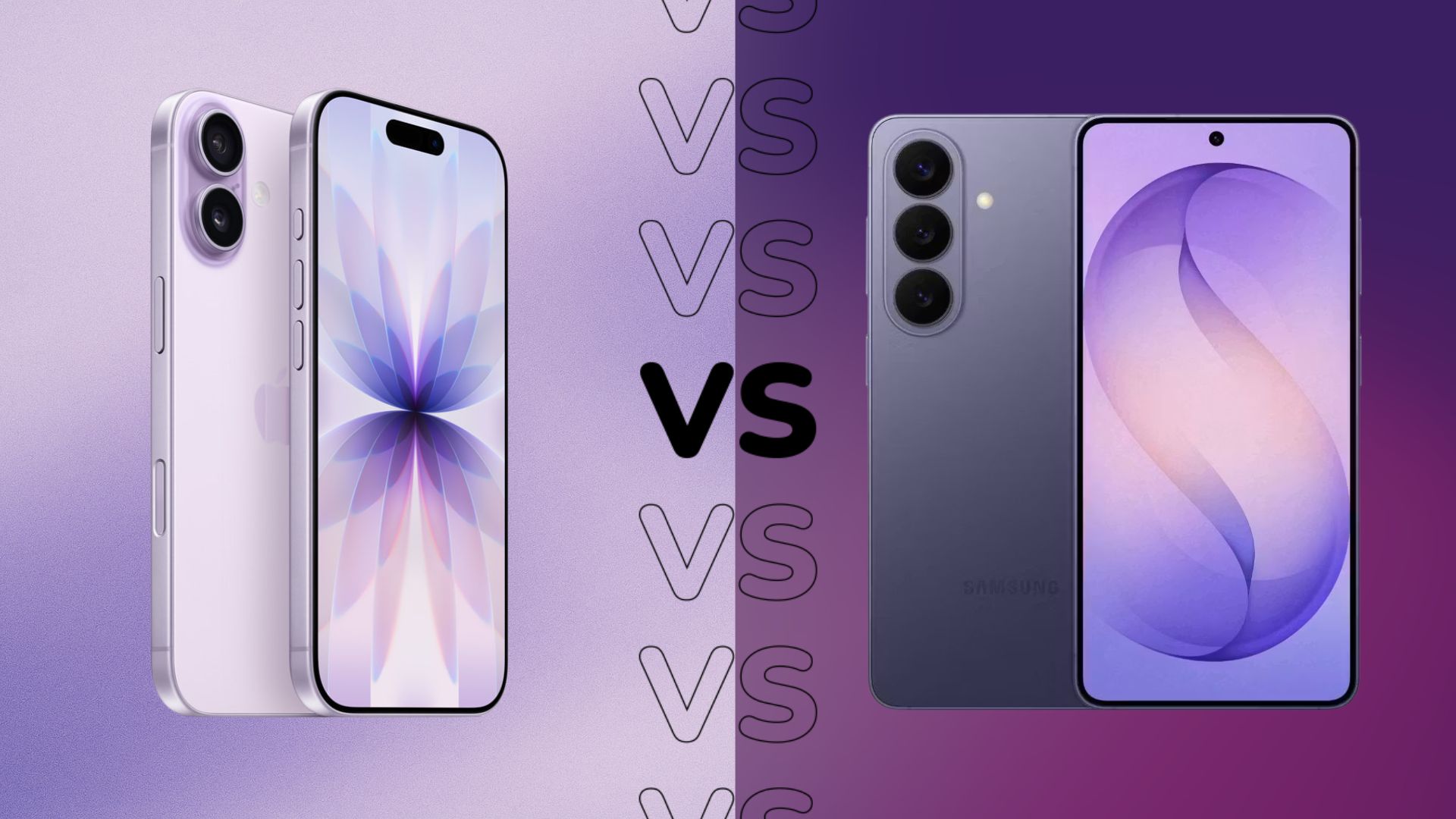
The iPhone 17 and Samsung Galaxy S26 are two very similar standard flagships, making the decision of which to buy all the more challenging.
Do you go for the premium, Liquid Glass-inspired iPhone 17 or stick to the ultra-slim Android flagship experience of the Samsung Galaxy S26? Is there really a difference in how they perform day-to-day? And what about elements like camera hardware, screen tech and all-important battery life?
While it’s easy to compare the two on paper, we’ve used both the iPhone 17 and Samsung Galaxy S26 in day-to-day use – and here’s how they compare in the real world.
Pricing and availability
The Samsung Galaxy S26 is the more expensive of the two, coming in at £879 for its 256GB model.
SQUIRREL_PLAYLIST_10208273
That said, if budget is a primary concern, the iPhone 17 is a slightly more affordable option at £799, with the same generous 256GB of storage out of the gate.
SQUIRREL_PLAYLIST_10207955
Design
The iPhone 17 and Samsung Galaxy S26 both present beautifully compact forms compared to their giant Ultra and Pro Max siblings, making them much easier to use one-handed, though they tackle premium builds in slightly different ways.

The Samsung Galaxy S26 is certainly the thinner and lighter of the two, measuring in at just 7.2mm at the edges and a mere 167g in the hand. Samsung has refined the design slightly this year, shrinking the display bezels further and housing the cameras in a raised, pill-shaped island rather than letting them poke out awkwardly.
However, if you hate a phone that rocks when placed flat on a table, beware; the S26 is the wobbliest phone we’ve used in a while.

It’s a pretty premium experience elsewhere, however, with a chassis constructed of aluminium and Gorilla Glass Victus 2, complete with full IP68 dust and water resistance to round things out.
The iPhone 17, on the other hand, retains its highly familiar (and now iconic) flat-edged, rounded-corner look it has sported for several generations, complete with the same aluminium frame and frosted glass panel on the rear. It also comes in attractive colour options like Sage and Mist Blue, alongside a premium-looking matte-black finish.

Like the Pro models, it features the programmable Action button on the left and Camera Control on the right, though the latter remains placed a little too far down the side to be comfortable enough for swift setting changes or snapping photos.

Apple has, however, enhanced the phone’s ruggedness with Ceramic Shield 2 on both the front and back to ward off micro-scratches and damage from drops, and while it matches the S26’s IP68 rating, it boasts added protection down to 6 meters for up to half an hour.
Screen
Both Apple and Samsung deliver a top-notch screen experience, though the iPhone finally takes the win with this generation.

The Samsung Galaxy S26 delivers a vibrant 6.3-inch Dynamic AMOLED 2X panel with a 1080 x 2340 resolution and a smooth LTPO-enabled 120Hz refresh rate – a very familiar setup largely carried over from the Galaxy S25.
Still, general viewing angles are fantastic, and its 2600nit peak brightness easily cuts through direct sunlight outdoors. It does, however, miss out on the anti-reflective coating and Privacy Display tech found on the S26 Ultra.
Apple, on the other hand, has finally relented and added the previously Pro-exclusive ProMotion 120Hz screen tech to the base-model iPhone 17.

The 6.3-inch screen packs a sharp 1206 x 2622 resolution that remains detailed, bright and vivid, but the more important element here is LTPO tech; it allows the screen to drop all the way down to 1Hz to maximise battery life, just like Samsung’s option.
Visibility is also impressive, with the iPhone 17 reaching a massive 3000-nit peak brightness (1600-nit in high-brightness mode) while dropping to just 1 nit for a more comfortable late-night viewing experience.
Cameras
If there’s one area where the Galaxy S26 and iPhone 17 diverge, it’s in the camera department.
The Samsung Galaxy S26 features a strong triple-camera system comprising a 50MP main sensor, a 10MP 3x telephoto zoom lens, and a 13MP ultrawide. The primary camera is the strongest of the bunch, capturing detailed photos with a vibrant, saturated processing style that preserves shadow detail in backlit scenes – but the other sensors are weaker.

The 3x zoom struggles to lock focus on moving objects in windy conditions, and because it’s only a 10MP sensor, digital cropping is limited compared to high-res rivals. The 13MP ultrawide is the weakest link, turning out grainy, pale images with clear edge distortion as soon as light levels drop.
The iPhone 17, on the other hand, lacks a dedicated telephoto lens, instead relying on an optical-quality 2x in-sensor digital crop from its otherwise excellent 48MP main sensor, which can push to around the 4x mark before things get spotty.

The main snapper provides sharp, colour-accurate images with Apple’s reliable ‘always good’ point-and-shoot processing. This year’s standout is the massive upgrade to the accompanying 48MP ultrawide sensor, which finally matches the main sensor in colour and detail, even in more challenging lighting conditions.
We’re also big fans of the iPhone’s new selfie camera; it uses an 18MP square sensor, allowing you to take full-res portrait or landscape shots without needing to rotate the phone. A small touch, but one that makes a big difference in use.
Performance
In terms of day-to-day use, both devices feel rapid with plenty of processing headroom that’ll get you through most mobile-related tasks without breaking much – if any – of a sweat.

The Galaxy S26 ships with the Exynos 2600 chipset in the UK (the Snapdragon 8 Elite Gen 5 in other regions like the US) and a rather generous 12GB of RAM. Benchmark scores are, unsurprisingly, brilliant, nearly matching the Snapdragon 8 Elite Gen 5 in the S26 Ultra in some cases.
It also helps that One UI is highly optimised, ensuring that taps and swipes are fluid and lag-free. Gaming is similarly smooth, with titles like Mario Kart Tour running at high resolutions without noticeably heating its relatively thin chassis.

The iPhone 17 counters the S26’s performance with its custom Apple A19 chip alongside a more conservative 8GB of RAM. Though it lacks the extra GPU core of the A19 Pro variant, it handles pretty much everything flawlessly. Social media timelines scroll without a hint of stutter, and intensive apps load instantly. You’ll be able to play even console-level games on this thing without much issue.
Software
Your choice of phone will likely come down to your preference for iOS or Android, but regardless, both systems have had notable updates this year.

The S26 runs One UI 8.5 based on Android 16, but the bigger focus here is its AI smarts. Galaxy AI covers a wide range of features, from returning favourites like photo eraser to new features like the real-time AI Noise Eraser, which reduces distracting background tracks and crowd sounds directly in apps like YouTube. And, with seven years of OS upgrades to look forward to, it should only improve over time.
The iPhone 17 runs iOS 26, which as I’m sure we’re all aware of at this point, ships with the redesigned Liquid Glass interface. The at-times controversial UI change adds an unmistakable charm to the software, with colours physically refracting beneath the UI layers and moving with organic elasticity.

Unfortunately, Apple’s AI push remains underwhelming, especially compared to Samsung’s. The Photo Clean Up tool leaves glaring signs of editing, text transcription is hit-and-miss, and Image Playgrounds looks almost child-like compared to rivals.
However, that could all change with iOS 27 and the long-awaited release of the redesigned, smarter Siri – we’ll just have to wait and see for now.
Battery life
When it comes to both overall battery life and charging capabilities, Apple’s iPhone 17 has a clear win.

The Samsung Galaxy S26’s 4300mAh battery is an improvement over its predecessor, but it remains somewhat average in use. Light users managing around 3-4 hours of screen time per day will coast through easily, but power users will find themselves running low before the sun goes down.
It’s also severely let down by slow 25W charging and a Qi2 wireless implementation without magnets, instead leaving magnetic connectivity to casemakers.
The iPhone 17, on the other hand, sports a 3692mAh battery that comfortably lasts through an intense 12- to 14-hour day with few complaints. Everyday tasks like scrolling through TikTok, using Google Maps for navigation and messaging on WhatsApp will still leave you with a solid 20% or so in the tank by bedtime.

Charging is also significantly improved, boasting rapid 40W wired charging and 25W MagSafe wireless support. Paired with a 65W charger, it hits 50% in just 26 minutes – much quicker than the Samsung competition.
Verdict
Overall, the iPhone 17 stands out as the better buy for most people in this generation, with Apple finally addressing key long-term complaints in its entry-level iPhone.
Both devices offer premium, compact designs that are increasingly rare in the smartphone market, paired with fluid 120Hz displays, exceptional flagship performance, and capable primary camera sensors. However, the iPhone 17 justifies its price with superior camera hardware – both front and rear – and vastly superior 40W wired and 25W magnetic wireless charging.
That said, the Galaxy S26 remains an excellent choice if you’re on the market for a triple-lens camera system with a dedicated 3x zoom lens, prefer an ultra-thin 7.2mm body, or simply prefer Android to iOS. There’s no hardware that’ll tempt you if you don’t like the hardware it runs on, after all.
But, with its weak secondary cameras, average battery life and slower 25W charge speeds, it takes a back seat to the more polished package offered by the iPhone 17.
To see how the two compare more widely, take a look at our selection of the best smartphones.