When you buy a TV, what motivates the purchase: Picture quality? Value? Screen size? Brand loyalty?
Is brightness in nits, dimming zones and Delta E colour accuracy among those ‘needs’. I’d hazard a guess and say ‘probably not’.
Which is not to say that these areas are not important, but I’d make an assumption that most of the TV buying audience is not au fait with these areas – some won’t know their nits from their candelas, and others just won’t care.
And that’s fine.
But the TV market seems to have developed a fixation with measurements and numbers, and it’s become a question of to what end?
Playing the numbers game
For the most part, you’re unlikely to come across these technical terms during your TV buying experience. Browsing the likes of Currys, Amazon and Richer Sounds, you’ll be exposed to the marketing ramble, most of it words that look like they could be equations or formulas (NQ4 AI Gen3, a9 AI processor).
On our side, the reviewers’ side, we get this as well as insight on the technical side. Of course, we need to know how they work, but I won’t lie in saying that some of this stuff goes over my head and requires educating myself and asking questions.
The more advanced TVs get, the more complex they become to understand. The use of AI has, in a way, accelerated this complexity faster. AI is often used as a blanket term for tech. For some TV manufacturers, as part of their brand story, it’s easier to say AI to get people interested and fit as part of the overall story in tech.

AI has helped TVs achieve a higher level of performance. But it’s also turned TVs into a numbers game – my number is bigger than yours.
But what does it really mean? If I have a TV from Samsung, LG, Sony, Hisense and TCL and they all hit 3000 nits of brightness, which is better? The one with more dimming zones? The one that covers the widest colour spectrum? The one with the best Delta E number?
Focusing on these areas turns it into a specs battle, and for most people, none of these measurements will have much context in their living room. If the picture looks good, then it looks good. Things like Delta E, tone mapping, and colour gamut – they’ll end up just confusing the buyer or making decisions more complicated, not easier.
Welcome to the real world
The TV that prompted this discussion was the Hisense UR9.
On paper, this TV has stonking specs. It’s an RGB Mini LED, brand new technology to the TV market that allows for purer colours, displaying a wider range of colours than more conventional LCD TVs and doing so with more accuracy. The number of dimming zones is nearly 1000, it claims to hit peak brightness levels of 4000 nits. All these specs suggest a Bona fide contender.
So why was I left underwhelmed by the UR9’s picture?
Colours weren’t that punchy or bright. The levels of sharpness and detail were less than those of an LG OLED65G6 sat next to it. The Dynamic mode, which should be the brightest, looked dull. Filmmaker mode, Cinema mode and IMAX Enhanced mode all looked identical to the point where I thought something must be wrong with the TV.
Having reviewed the U8Q in 2025 and hailed that as the best Hisense TV I’d tested, the UR9 felt as if the balloon had popped, leaving me deflated.

Reasons? I don’t think the anti-reflection/anti-glare screen worked in Hisense’s favour, as it seemed to shave off levels of detail, sharpness, and reduce contrast, which I also noted on Hisense’s Canvas TV. Highlights and overall brightness weren’t as high as measurements suggested, black levels not as strong or as deep as I hoped.
Viewing angles weren’t great either, like down to the type of panel used, and colours were a bit off despite many reviews noting the accuracy the UR9 out of the box.
But something just wasn’t quite right with the TV’s picture performance.
Personally, I wonder if this is down to Hisense’s PQ philosophy, or how it views colour. Every brand has a PQ philosophy; Sony wants to reflect the creator’s intent, as do LG and Panasonic, while Samsung wants to do that and offer the brightest, most colourful picture experience with any technology it gets its hands on.
But I can’t quite discern what Hisense’s philosophy is. In the past I’ve found its TVs have relied heavily on Dolby Vision, which is not their PQ philosophy but Dolby’s.
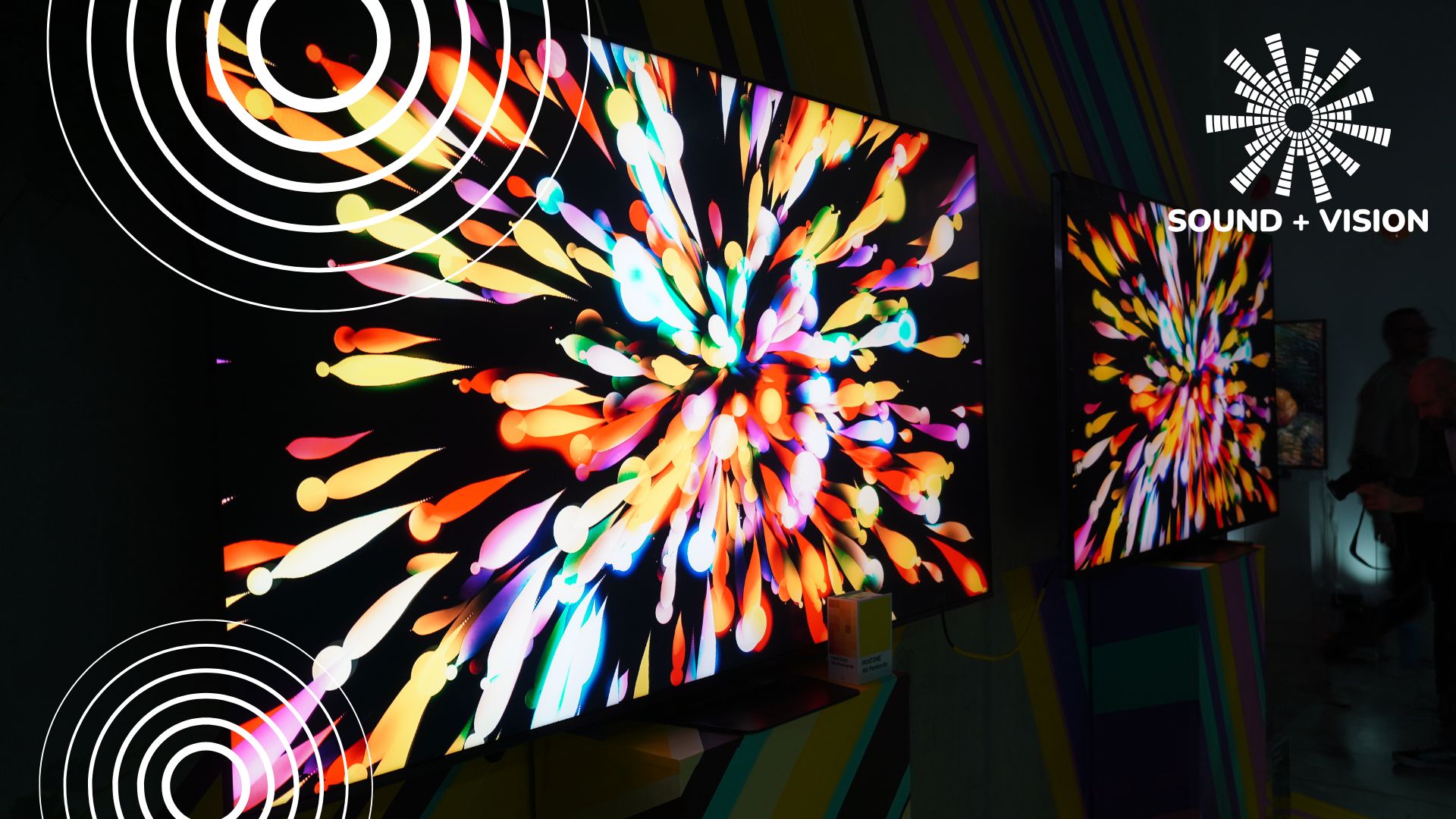
Earlier this year, I witnessed a shootout between several TVs: OLED, Mini LED, RGB Mini LED, and SQD Mini LED. The model that fared the worst was the Hisense, with all the test patterns and demos causing some sort of issue.
One pattern in particular showed Hisense’s lack of precision. The pattern was a white rectangle surrounded by green. The rest of the TVs showed the white rectangle as white – the Hisense showed the white rectangle to be a shade of green…
The gist of all this? What the specs say on paper doesn’t always translate to the real world.
Don’t be swayed by the specs, the charts, the stats. Not everything is always what it appears to be.