A recent report by the Climate Change Committee has warned that, as average temperatures rise, the UK is facing a new climate, and air conditioning will be needed in many homes to cope with it.
With a lot of old housing stock built for colder climates, many of our homes experience extreme heat, particularly with the growing number of heatwaves each year. It’s expected that by 2050, heatwaves will last longer and be hotter.
As the Climate Change Committee has set out, it’s not just air conditioning; passive options, such as shading, should also be considered. Passive options are often overlooked by the mainstream press, and I think there’s a general consensus that just installing air conditioning is the best option. It’s not. For the best effect, a combination of tactics is needed.
Stop the sun before it warms your house
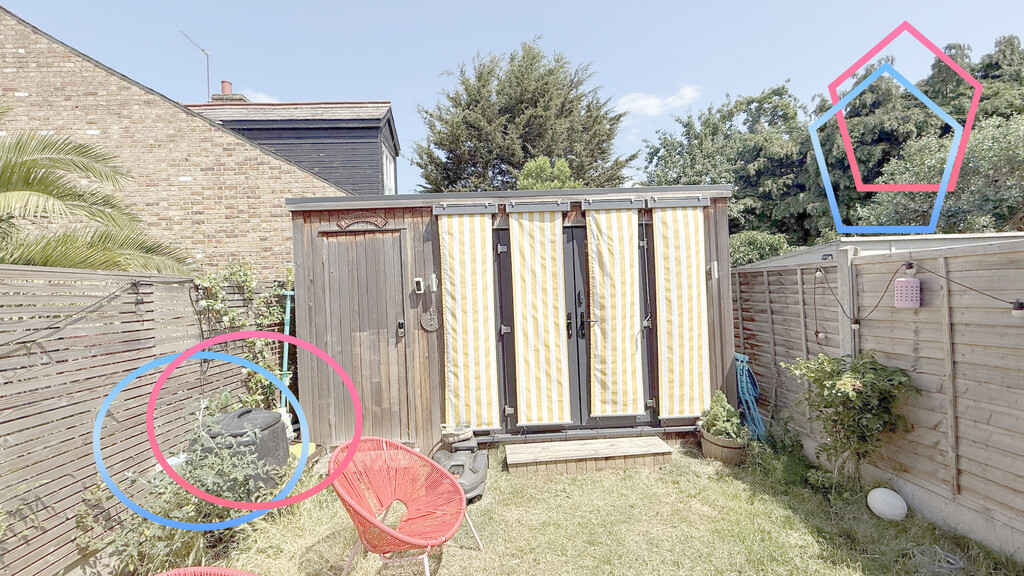
I’ve got an extreme example: my garden office. My garden office is south-facing, and the front of it is entirely glass: French doors with two side windows. They’re double-glazed, so keep the heat in in winter, but in summer, or when the sun shines at all, they’re a massive problem.
The sun’s infrared penetrates through the glass and warms objects inside, and then the air, which has nowhere to escape. On a relatively cool but sunny day, say around 16°C, my office can easily be mid-20°C inside. On a very hot day, it gets insanely hot inside: I’ve seen it hit 48°C, and this can only get worse as temperatures increase.
Air conditioning would seem to be the answer, but it’s not as easy as you think. I’ve tried many portable air conditioning units, vented out of a sealed window, and they work while the weather is mild.
As soon as the temperatures rise and the sun shines directly in, air conditioning can slow the heat rise, but it can’t stop it, and it certainly doesn’t make the environment nicer.
I’ve used internal blinds and even UV film on the windows, but they’re largely pointless: once the heat is in, it’s trapped. The answer, I found, was to use external blinds. Rolling them down stops the sun from getting in and keeps the temperature to manageable levels; if it’s hot, then air conditioning can do its job and cool the room down when required, but I often find that I don’t need it.
Similarly, in my loft bedroom, the front of the house is south-facing, so the sun shines through the Velux and makes it too hot. At times, the handles are burning hot. I bought external sunshades, which fit to the outside of the Velux window, and reduce the heat through them.
Yes, I still need air conditioning when it gets very hot, but the shades reduce the amount of cooling that’s needed.
External shutters, rather than blinds, can be even better, and that’s what you tend to find in hot countries, as well as overlap shading. In my house, they’d be easy to use, as I have sash windows, so nothing protrudes.
Modern casement windows are harder, as they open outwards, so once they’re open, you can’t close any shutters. But there are plenty of external smart blinds that can be operated by remote and would work, since you can operate them with the windows closed.
Air conditioning is expensive to run
Although modern air conditioning systems use heat pumps for maximum efficiency, electricity costs make them expensive to operate. And the more heat they must deal with, the longer they have to run, increasing the cost.
More AC also means more pressure on the grid, and not all that power is clean power, contributing to more fossil fuels and more CO2.
There are calls from some places to combine air conditioning with solar panels, powering the units with clean, free energy, but this isn’t without its issues either. As discussed before, solar works well if you’ve got a south-facing roof; if you’re under shade, in a flat, or have an east/west roof, then you get little power, or it’s not worth having it at all.
There’s also a big difference between properly installed split-unit air conditioning and portable units. Split units, with the condenser unit outside, are much more efficient than portable units, and you can run multiple vents from one external unit.
Split air conditioning is more expensive to install, and there’s the issue of knowing where to put the sizable external unit. Going back to the issue of the UK having a lot of old housing stock, particularly Victorian terraces, there’s very little space to put the external unit.
In fact, one of my neighbours has just had air conditioning installed, and the large external compressor is outside the front door, covered but still clearly visible. In my house, I couldn’t have air conditioning installed, as there’s no space for the outside unit.
Then, there’s the issue of what to do if you want a heat pump installed for your hot water. Many split air conditioning units are air-to-air heat pumps, so they can cool or heat a room, but they won’t heat your radiators, underfloor heating or hot water.
It’s possible to get a system that will do everything, but they’re not common. So, in most cases, you could end up with a heat pump for hot water and a separate system for air conditioning. Where are all those units supposed to go?
Cools inside, hot outside
Air conditioning doesn’t cool a room by blowing out cold air; instead, these systems use a heat pump to move heat from one place to another. In this case, they draw heat in from inside and expel it outside, as explained in our guide to how portable air conditioners work.
So, all of the hot air inside your home is pumped to the outside environment. According to the Royal Institute of Chartered Surveyors (RICS), in urban areas with a lot of air conditioning units, the impact at night can be an increase of temperature by 2.5°C. So, as we cool our homes down, we heat the outside, which means there’s a need for more cooling, and so on.
RICS goes on to suggest that new buildings should adopt passive techniques to avoid overheating, and that leaving plenty of space for vegetation can help: trees are a good way to cool urban spaces and create shade.
Don’t aim for fridge-like temperatures and limit use
Once AC is available, people tend to use it more. And, people often want to cool rooms to very low levels, to get that icy-cold feel. Both of these are wrong. AC should be used when required, not when it feels nice, and higher target temperatures should be used.
I tend to set my portable AC to 23°C when I do use it on the very hottest nights. That’s cool enough to sleep in, and reduces how much power the AC unit uses.
There’s no single solution
Things are going to get hotter, and air conditioning is only part of the solution, but certainly not by itself. New buildings should be designed to be thermally efficient and reduce the reliance on air conditioning, while older buildings need help: better insulation and shading to stop the sun shining through large windows (natural and artificial via blinds).
These passive techniques can’t completely stop a house from getting too hot, but they do lower the maximum temperature they reach and, therefore, the amount of air conditioning that needs to be used.