A public clash between prediction market platform Kalshi and the advocacy group Gambling is Not Investing is playing out alongside March Madness, with fresh comments from Kalshi leadership adding fuel to the debate.
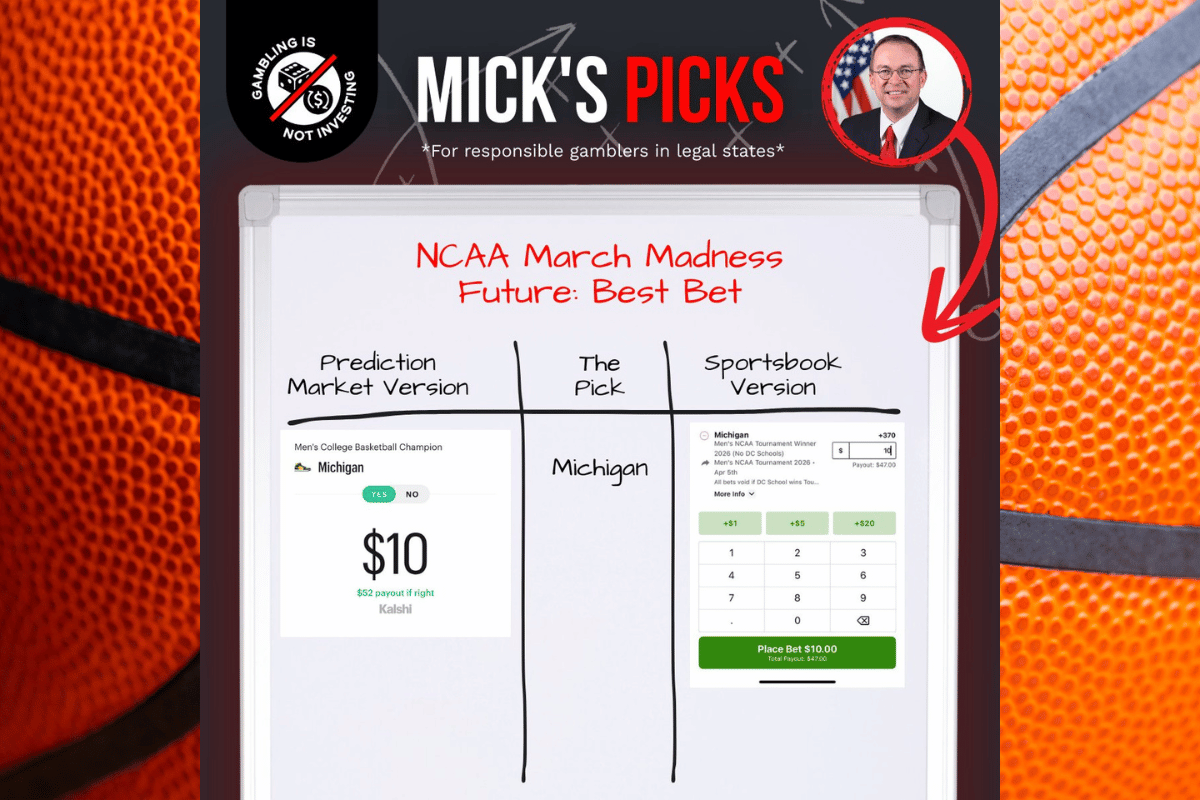
The dispute gained traction after the group introduced “Mick’s Picks,” a campaign featuring former congressman and Executive Director Mick Mulvaney placing tournament wagers through regulated sportsbooks. In its first example, Mulvaney backs Michigan to “cut down the nets,” while contrasting those bets with similar contracts offered on prediction market platforms.
Gambling is Not Investing argues that the comparison showcases that prediction markets function as sports betting in disguise and should be regulated the same way.
“With March Madness upon us, I will be responsibly and legally participating in some good-natured betting on the tournament,” Mulvaney said in a statement seen by ReadWrite. “It is shameful that these prediction market platforms are attempting to argue what they offer is somehow any different than sports betting.”
The coalition, described in recent reporting as a mix of advocacy groups and industry stakeholders, has warned that event-based contracts are slipping past state and tribal gaming laws designed to protect consumers.
“By side-stepping thoughtfully written state and tribal laws, prediction markets are targeting teenagers, misleading consumers, and hooking Americans on gambling without any protections,” Mulvaney added.
Kalshi leaders argue with Gambling Is Not Investing using pricing and transparency arguments
Kalshi’s leadership and supporters have responded directly, pointing to pricing differences as evidence that their platform offers a distinct, and potentially better, product.
Brandon Beckhardt, Kalshi’s Growth Lead, pushed back on social media, writing that Mulvaney “got worse odds because he didn’t use Kalshi,” framing the comparison as one that favors prediction markets rather than undermines them.
Kalshi CEO Tarek Mansour made a similar case, saying, “All this screenshot shows is that Kalshi payouts are better for the consumer.”
Critics say prediction markets exploit regulatory gaps, avoiding taxes and safeguards that sportsbooks must follow. Supporters counter that these platforms operate more like financial exchanges, where pricing reflects probabilities and users often face fewer restrictions.
The issue is also drawing attention in Washington. Recent reporting notes that Rep. Dina Titus has introduced the Fair Markets and Sports Integrity Act, legislation aimed at clarifying how sports-related event contracts should be classified and regulated. Lawmakers are increasingly focused on whether these products belong under financial oversight or gambling rules.
The timing has amplified the stakes. March Madness consistently ranks among the most heavily wagered events in the country, making it a natural flashpoint for this debate. At the same time, the NCAA has raised concerns about how Kalshi references the tournament. The organization has objected to the platform’s use of its name, trademarks, and branding in ways that could suggest an official connection. Because the NCAA controls March Madness, it argues that any implication of endorsement crosses a legal line.
Featured image: Gambling Is Not Investing via X