Joe Maring / Android Authority
It’s no secret that one of the best reasons to use a Pixel is the suite of Pixel-exclusive software features Google’s phones come with. Whether it’s a longstanding feature like Now Playing or a newer addition such as Pixel Screenshots, they’re why Pixels are as good as they are.
However, with so many available, it’s easy to let some of these Pixel goodies slip through the cracks — as I’ve done for years with Google’s free Pixel VPN. Pixel VPN works just like any paid VPN service, except it’s 100% free. And as of February 2026, Google has made Pixel VPN even better.
If you have a modern Pixel, you may not know you have access to a fully functional VPN at no extra cost. If you’re not already using it, you should, and I’ll show you how.
Do you use Pixel VPN?
0 votes
What Pixel devices can use Pixel VPN?

Joe Maring / Android Authority
Before you start looking for Pixel VPN, you’ll want to confirm that your Pixel supports the feature. Most modern Pixels do, but just for clarity’s sake, here’s the full list:
- Pixel 7
- Pixel 7 Pro
- Pixel 7a
- Pixel Tablet
- Pixel Fold
- Pixel 8
- Pixel 8 Pro
- Pixel 8a
- Pixel 9
- Pixel 9 Pro
- Pixel 9 Pro XL
- Pixel 9 Pro Fold
- Pixel 9a
- Pixel 10
- Pixel 10 Pro
- Pixel 10 Pro XL
- Pixel 10 Pro Fold
- Pixel 10a
The most notable exceptions from this list are the Pixel 6, Pixel 6 Pro, and Pixel 6a. Although the phones are still receiving software updates (most recently the Android 17 Beta), they unfortunately don’t support Pixel VPN.
You’ll also want to confirm that Pixel VPN works in your country. The US, UK, Canada, Japan, and many other locations are supported; see the full list on Google’s support page.
How to turn on and use your Pixel’s VPN

Joe Maring / Android Authority
As with most Pixel features, enabling Pixel VPN is pretty straightforward. However, unless you know exactly where to look, finding it initially can be a chore. Here’s exactly what to do:
- Open the Settings app on your Pixel.
- Tap Network & internet.
- Tap VPN.
- Tap VPN by Google.
- Scroll down the page or tap More.
- Tap Use VPN at the bottom of the screen.
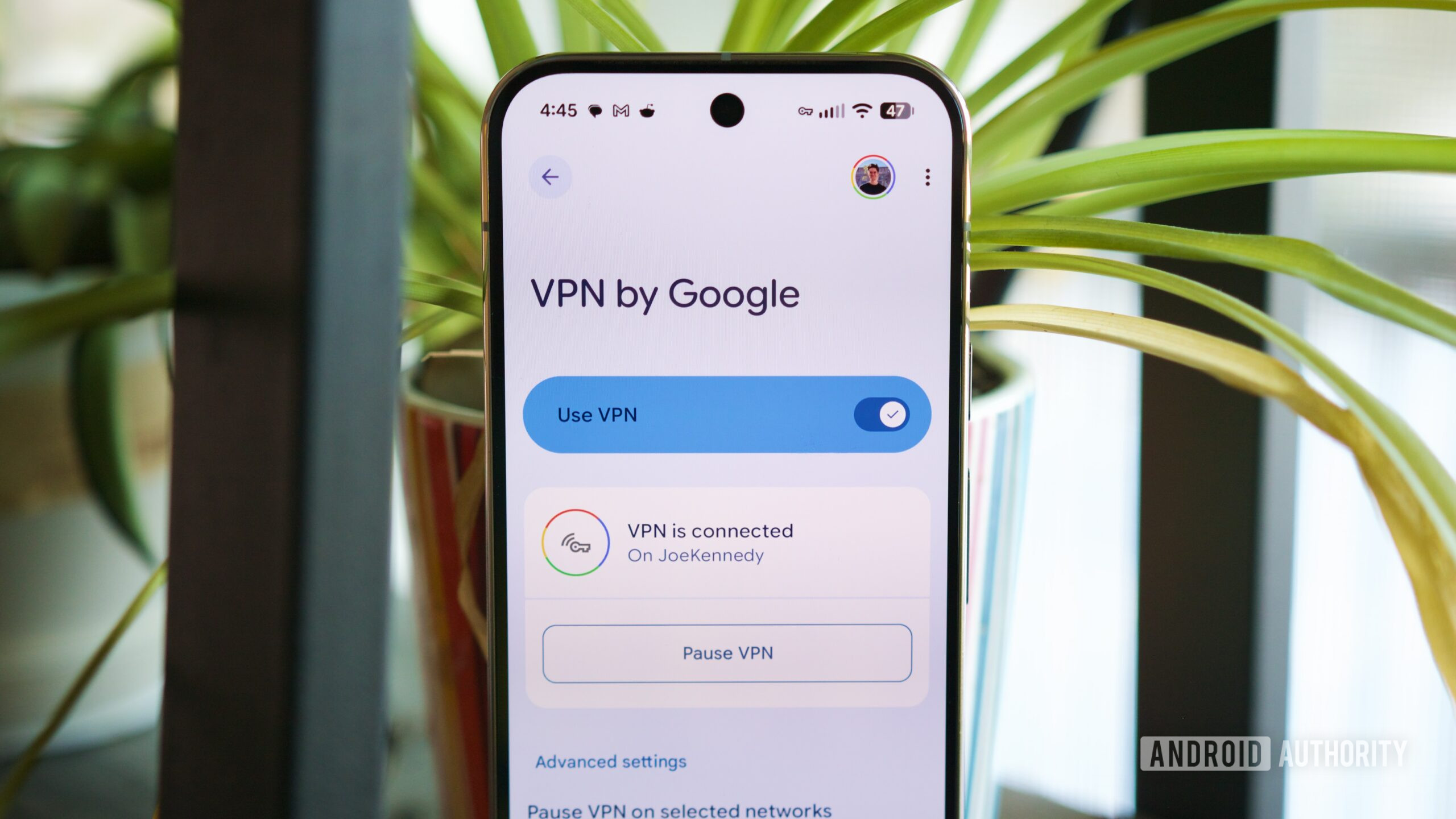
You’ll need to wait a couple of seconds for the VPN to connect, but it’ll be up and running shortly. Once the screen changes from “VPN is connecting” to “VPN is connected,” you’ll know you’re in the clear.
From this page, you have a few customization tools at your disposal.
By default, Pixel VPN won’t turn on if you’re connected to a mobile network. If you still want Pixel VPN to operate on mobile networks, tap Pause VPN on selected networks and then tap the trash can icon next to Mobile network.
Similarly, you can configure the VPN to pause/disconnect for specific Wi-Fi networks. From this same page, tap Get started, tap While using the app on the location permission pop-up, tap Go to settings, tap Allow all the time, and then go back. Now, you’ll see a full list of saved Wi-Fi networks and can tap whichever ones you don’t want to use Pixel VPN with.
Back on the main Pixel VPN page, tap Exclude selected apps to select any apps you want the VPN to ignore when it’s connected. You can also tap Notifications to choose whether to receive VPN notifications (you will by default).
Finally, ensure you have the Pixel VPN tile in your Quick Settings. Google recently updated the tile to include connection information you can view directly from the Quick Settings page, making the tile significantly more useful than before. Instead of the tile simply saying “VPN by Google,” it’ll now show one of four statuses based on your connection: Connected, Paused, Connecting, or Can’t connect.
Don’t want to miss the best from Android Authority?


Thank you for being part of our community. Read our Comment Policy before posting.